

Analytics, Tracking & Attribution in Performance Marketing: The Foundation of Profitable eCommerce Scaling
Why Most eCommerce Brands Struggle to Scale Profitably
Many brands believe scaling revenue is simply about increasing ad spend. But in reality, the biggest obstacle in modern Performance Marketing is not traffic — it’s visibility.
Without accurate analytics, proper conversion tracking, and reliable attribution systems, businesses make decisions based on incomplete data.
That means campaigns appear profitable when they’re not, winning channels get ignored, and budgets are allocated inefficiently.
As privacy changes, cookie limitations, and multi-platform customer journeys become more complex, understanding where conversions truly come from has become one of the most important competitive advantages in digital marketing.
The brands dominating modern eCommerce are not guessing. They are operating with precision.
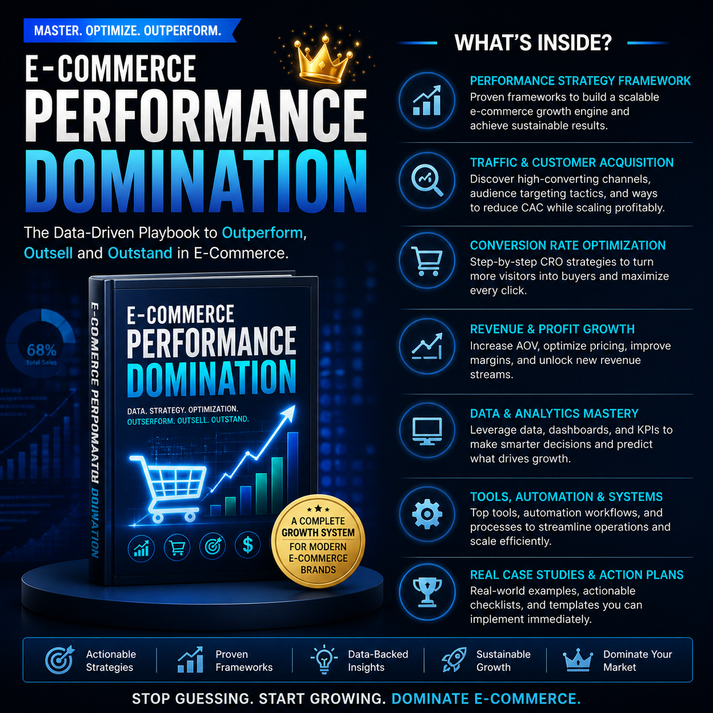
Want to build a complete data-driven eCommerce growth engine? Explore the full E-Commerce Performance Domination system and learn how elite brands optimize analytics, attribution, scaling, and profitability.
The Hidden Cost of Poor Tracking in Performance Marketing
Most businesses rely entirely on the reporting dashboards inside advertising platforms. However, platforms like Google Ads, Meta Ads, and TikTok Ads often report performance differently.
This creates attribution gaps that lead to inaccurate optimization decisions.
For example:
- Meta may over-credit view-through conversions.
- Google Ads may prioritize last-click interactions.
- Email campaigns may assist conversions without receiving credit.
- Organic search traffic may appear less valuable than it actually is.
- Returning customer purchases may distort acquisition metrics.
When brands fail to unify their tracking systems, they lose clarity around profitability. And without clarity, scaling becomes risky.
What Analytics, Tracking & Attribution Actually Mean
Analytics
Analytics is the process of collecting and interpreting user behavior data across websites, funnels, landing pages, and campaigns.
Strong analytics systems help marketers understand:
- Which traffic sources generate the highest-value customers
- Which landing pages convert best
- Where users abandon the funnel
- How customer behavior changes across devices and channels
- Which campaigns produce long-term profitability
Tracking
Tracking refers to monitoring user actions across the customer journey.
This includes:
- Page views
- Add-to-cart actions
- Purchases
- Checkout events
- Email signups
- Lead submissions
Modern tracking systems typically involve tools like:
- Google Analytics 4 (GA4)
- Google Tag Manager
- Meta Pixel
- Server-side tracking
- Conversion APIs
- UTM parameter frameworks
Attribution
Attribution determines which marketing touchpoints deserve credit for conversions.
In today’s multi-channel environment, buyers rarely convert after a single interaction.
A customer may discover a product through Instagram, revisit through Google Search, subscribe to an email list, and finally purchase after seeing a retargeting ad.
Without proper attribution modeling, brands underestimate the channels actually driving revenue.
Why Accurate Attribution Changes Everything
The difference between average marketers and elite operators often comes down to decision-making quality.
And decision-making quality depends entirely on data accuracy.
Benefits of Advanced Performance Marketing Analytics
- Smarter Budget Allocation: Invest more confidently into profitable channels.
- Higher ROAS: Identify campaigns truly generating revenue.
- Better Funnel Optimization: Discover exactly where conversions are being lost.
- Improved Customer Insights: Understand buying behavior across touchpoints.
- Reduced Wasted Spend: Eliminate ineffective campaigns faster.
- More Accurate Scaling: Grow with confidence using reliable performance data.
Modern eCommerce scaling is no longer based on intuition. It’s built on measurement, optimization, and attribution intelligence.
Common Analytics & Attribution Mistakes That Hurt Growth
Relying Only on Platform Reporting
Advertising platforms are designed to retain ad spend. Brands should validate reporting independently using analytics dashboards and first-party tracking systems.
Ignoring First-Party Data
As third-party cookies become less reliable, building first-party customer data systems has become essential for long-term marketing stability.
Using Only Last-Click Attribution
Last-click attribution oversimplifies customer journeys and often undervalues awareness campaigns that contribute significantly to conversions.
Poor Tracking Setup
Incorrect event configurations, duplicate pixels, or missing conversion events can completely distort campaign performance metrics.
How to Improve Your Performance Marketing Tracking System
If you want stronger campaign performance and more reliable reporting, focus on these foundational improvements:
- Implement server-side tracking for better accuracy
- Use GA4 with properly configured conversion events
- Create standardized UTM naming conventions
- Audit analytics discrepancies regularly
- Track customer lifetime value — not just first purchases
- Integrate CRM and email data into reporting systems
- Build dashboards focused on profitability metrics instead of vanity metrics
The goal is not simply collecting more data. The goal is generating clearer decision-making.
If you want the complete framework behind profitable scaling, advanced attribution systems, conversion optimization, and modern eCommerce growth strategies, explore the full E-Commerce Performance Domination guide here.
What You’ll Learn Inside the Full E-Commerce Performance Domination System
The complete digital framework goes far beyond basic advertising tactics.
Inside the system, you’ll discover:
- Advanced Performance Marketing scaling frameworks
- eCommerce funnel optimization systems
- High-converting ad campaign structures
- Analytics dashboard implementation strategies
- Audience segmentation and retargeting systems
- Conversion rate optimization methods
- Attribution modeling for multi-channel campaigns
- Profitability-focused scaling strategies
Whether you’re an eCommerce founder, media buyer, growth marketer, or agency operator, mastering analytics and attribution creates a major competitive advantage.
Conclusion
The future of Performance Marketing belongs to brands that understand their data deeply.
Analytics, tracking, and attribution are no longer optional technical systems. They are the operational foundation behind profitable scaling.
The brands achieving sustainable growth today are not simply spending more on ads. They are making smarter decisions powered by accurate customer insights.
When you understand exactly where conversions come from, which campaigns drive profitability, and how customers behave across the funnel, scaling becomes dramatically more predictable.
Ready to master the complete eCommerce growth system behind profitable scaling? Access the full E-Commerce Performance Domination framework and learn how modern brands scale using advanced Performance Marketing systems.
Frequently Asked Questions
What is attribution in Performance Marketing?
Attribution is the process of identifying which marketing channels and touchpoints contributed to a conversion or sale.
Why is analytics important in eCommerce marketing?
Analytics helps businesses understand customer behavior, optimize campaigns, improve conversion rates, and make smarter budget allocation decisions.
What tools are commonly used for tracking and attribution?
Popular tools include Google Analytics 4, Google Tag Manager, Meta Pixel, server-side tracking systems, CRM integrations, and attribution platforms.
What is the difference between tracking and attribution?
Tracking captures customer actions and events, while attribution determines which channels deserve credit for conversions.
Can inaccurate tracking reduce ROAS?
Yes. Inaccurate tracking often leads to poor optimization decisions, inefficient budget allocation, and misleading performance reporting.
How can beginners improve their analytics setup?
Beginners should focus on proper event tracking, conversion verification, standardized UTM structures, and profitability-focused dashboards.