

How AI in Google Ads Can Boost Smart Shopping & Dynamic Ads
AI is no longer a futuristic feature inside Google Ads — it has become the foundation of modern advertising performance. From predictive bidding to audience automation, AI in Google Ads is helping marketers scale campaigns faster while reducing manual optimization work.
For ecommerce brands, Smart Shopping campaigns and Dynamic Ads have become two of the most powerful applications of machine learning-driven advertising. Businesses that understand how to leverage these AI systems effectively are seeing stronger ROAS, lower acquisition costs, and significantly higher conversion rates.
But here’s the problem: most advertisers still use these tools incorrectly.
They rely too heavily on automation without understanding the strategic inputs behind Google’s AI systems. As a result, campaigns underperform, budgets get wasted, and scaling becomes unpredictable.
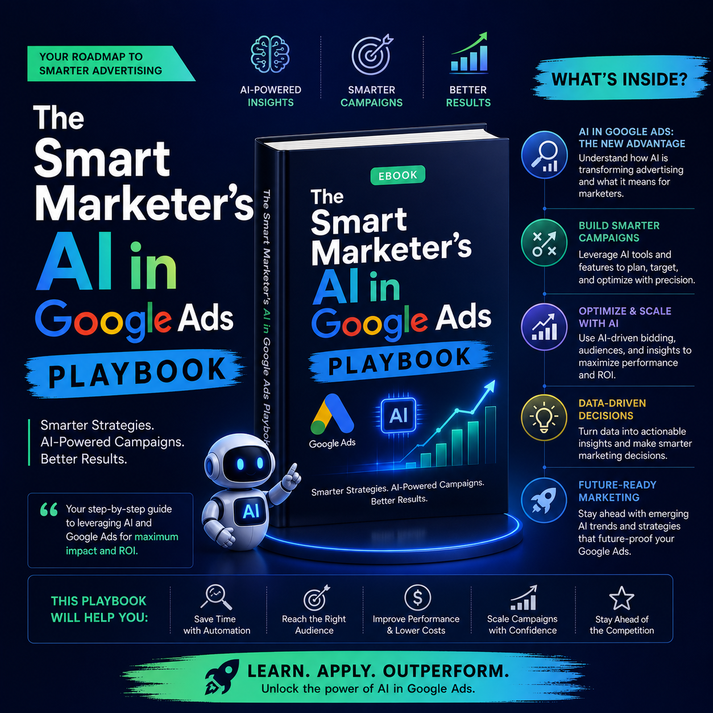
Want to master the complete system behind How AI in Google Ads Can Boost Smart Shopping & Dynamic Ads? Access the full The Smart Marketer’s AI in Google Ads Playbook
Why AI in Google Ads Is Reshaping Ecommerce Advertising
Traditional PPC management relied heavily on manual bid adjustments, audience testing, keyword segmentation, and performance analysis. While those fundamentals still matter, Google’s AI systems now process billions of signals in real time — far beyond human capability.
AI in Google Ads evaluates:
- User intent and browsing behavior
- Device type and location signals
- Purchase likelihood predictions
- Historical conversion patterns
- Real-time auction dynamics
- Audience engagement signals
This enables Smart Shopping campaigns and Dynamic Ads to automatically optimize delivery, placements, and bidding decisions for higher conversion probability.
How Smart Shopping Campaigns Use AI
Smart Shopping campaigns combine standard Shopping Ads with display remarketing using Google’s machine learning algorithms. Instead of manually managing separate campaigns, advertisers feed Google the right data and allow AI to optimize performance across networks.
Key AI Functions Inside Smart Shopping
- Automated bidding: AI adjusts bids based on conversion probability.
- Audience targeting: Google identifies high-intent buyers automatically.
- Cross-network optimization: Ads appear across Search, Display, Gmail, YouTube, and Discover.
- Creative optimization: AI tests combinations of headlines, images, and feeds.
- Predictive conversion modeling: Machine learning forecasts likely purchases.
The biggest advantage is scalability. Instead of spending hours manually optimizing campaigns, marketers can focus on strategy, creatives, product feeds, and customer psychology.
How Dynamic Ads Increase Conversion Potential
Dynamic Ads use AI-driven personalization to show users highly relevant products based on their browsing behavior, search intent, and previous engagement.
For ecommerce brands, this means:
- Showing abandoned cart products automatically
- Personalizing product recommendations
- Retargeting visitors with updated offers
- Serving ads dynamically based on inventory feeds
- Reducing wasted ad spend on low-intent audiences
Dynamic remarketing powered by AI can significantly improve conversion rates because the ads adapt to individual user behavior in real time.
Common Mistakes Marketers Make With AI in Google Ads
Many advertisers assume AI can completely replace strategy. That misconception often leads to weak campaign performance.
1. Poor Product Feed Optimization
AI performs only as well as the data it receives. Weak product titles, missing attributes, and low-quality images reduce Smart Shopping effectiveness dramatically.
2. Lack of Conversion Tracking Accuracy
If conversion tracking is broken or incomplete, Google’s machine learning models optimize toward incorrect outcomes.
3. Constant Campaign Editing
AI systems need stable learning periods. Frequent edits reset optimization cycles and hurt performance consistency.
4. Ignoring Audience Signals
While AI automates targeting, marketers still need strong customer data, remarketing lists, and behavioral insights.
Serious marketers are now combining AI automation with strategic human oversight. Learn the exact framework inside The Smart Marketer’s AI in Google Ads Playbook .
Practical Ways to Improve AI Performance in Google Ads
Optimize Product Feeds Aggressively
Better product feeds improve AI understanding. Include keyword-rich titles, detailed descriptions, GTINs, high-quality images, and accurate categorization.
Feed AI More Conversion Data
The more reliable conversion signals Google receives, the smarter bidding algorithms become. Enhanced conversions and offline conversion imports can strengthen optimization significantly.
Segment High-Value Audiences
First-party customer data remains incredibly powerful. Upload customer lists and create audience segments that help AI prioritize high-intent users.
Use Creative Testing Alongside Automation
AI can optimize delivery, but compelling creatives still drive engagement. Strong copywriting and visuals improve click-through rates and conversion signals.
What You’ll Learn Inside the Full Product
- Advanced AI bidding strategies for maximum ROAS
- Smart Shopping scaling frameworks
- Dynamic remarketing optimization systems
- AI-powered audience segmentation tactics
- Product feed optimization blueprints
- Conversion tracking setup strategies
- Google Ads automation workflows
- Performance scaling systems used by modern marketers
The full guide is designed for marketers, ecommerce founders, media buyers, agencies, and growth-focused brands looking to compete in the AI-driven advertising era.
Conclusion
AI in Google Ads is transforming how ecommerce brands acquire customers, optimize campaigns, and scale profitability. Smart Shopping and Dynamic Ads are no longer optional tools — they are becoming essential competitive advantages.
The brands winning today are not simply “using automation.” They understand how to guide AI strategically using better data, stronger creatives, optimized feeds, and intelligent campaign structures.
Ready to unlock the full AI-powered Google Ads framework? Explore The Smart Marketer’s AI in Google Ads Playbook and learn how modern advertisers are scaling smarter with AI-driven systems.
Frequently Asked Questions
What is AI in Google Ads?
AI in Google Ads refers to Google’s use of machine learning and automation to optimize bidding, targeting, audience segmentation, and ad delivery for improved campaign performance.
How do Smart Shopping campaigns work?
Smart Shopping campaigns combine automated bidding, remarketing, and cross-network ad placements using AI to maximize conversions and return on ad spend.
Are Dynamic Ads effective for ecommerce stores?
Yes. Dynamic Ads personalize product recommendations and retarget visitors based on browsing behavior, increasing relevance and conversion rates.
Can beginners use AI-powered Google Ads campaigns?
Beginners can use AI-driven campaigns, but understanding campaign structure, product feeds, and conversion tracking is essential for strong performance.
Does AI replace human optimization in Google Ads?
No. AI improves automation and decision-making speed, but strategic oversight, creative direction, and customer psychology still require human expertise.