

How To Dominate Local Voice Search in SEO
Voice Search Is Reshaping the Future of SEO
The way people search online has fundamentally changed.
Instead of typing fragmented keywords into Google, users now ask full conversational questions through smartphones, smart speakers, wearable devices, and AI assistants.
Searches like:
- “What’s the best digital marketing agency near me?”
- “Which coffee shop is open right now nearby?”
- “Who offers the best SEO services locally?”
are becoming the new standard.
This shift is creating an enormous opportunity for businesses and creators who understand how modern Voice SEO works.
Voice search optimization is no longer optional. It is quickly becoming one of the most important components of local SEO, AI visibility, and future-proof digital marketing.
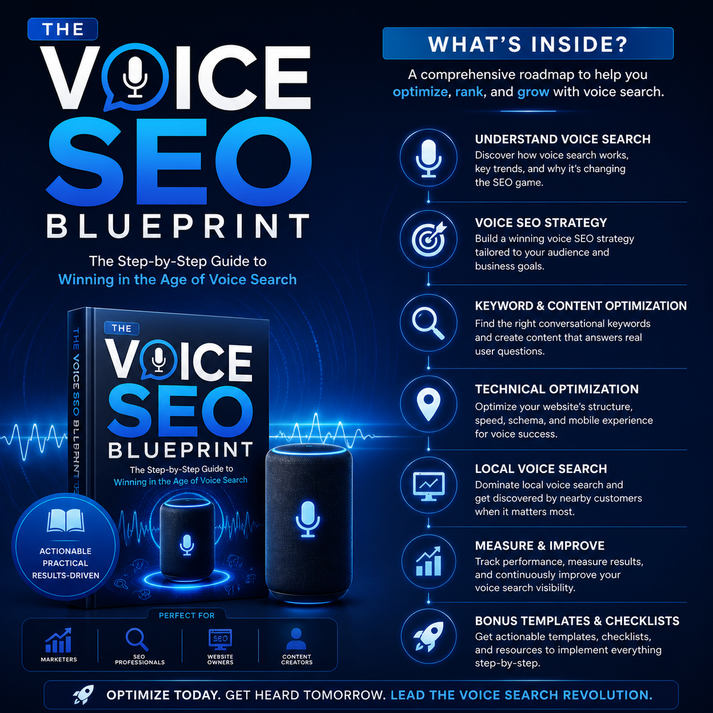
Want to master the complete Voice SEO framework behind modern search visibility?
Explore The Voice SEO Blueprint here and learn the advanced systems used to dominate conversational and AI-powered search results.
Why Most Websites Fail at Local Voice Search
Most businesses are still optimizing for outdated search behavior.
Traditional SEO strategies focused heavily on short-tail keywords and desktop search experiences. However, voice search relies on entirely different ranking signals.
Search engines now prioritize:
- Natural conversational content
- Contextual relevance
- Fast mobile experiences
- Local authority signals
- Structured data clarity
- Direct answer optimization
Websites that ignore these factors struggle to appear in voice-assisted search results.
That means even strong traditional rankings may not translate into visibility across AI assistants and conversational search systems.
What Is Voice SEO?
Voice SEO is the process of optimizing digital content so it can rank for spoken search queries generated through voice-enabled devices and AI assistants.
Unlike traditional SEO, voice optimization focuses on how humans naturally speak rather than how they type.
This includes:
- Question-based searches
- Long-tail conversational keywords
- Semantic search relevance
- Local search intent
- Featured snippet optimization
- AI-generated search answers
As Google and AI-driven search systems evolve, conversational optimization is becoming a core ranking factor.
How To Dominate Local Voice Search in SEO
1. Focus on Conversational Search Intent
Voice users speak naturally. They ask complete questions rather than typing short phrases.
For example:
Typed Search: “best dentist NYC”
Voice Search: “Who is the best dentist near me for dental implants?”
Your content should mirror how real people communicate.
Create pages and blog content around:
- Questions users actually ask
- Long-form conversational phrases
- Problem-solving queries
- Local intent keywords
2. Build Strong Local SEO Signals
Local relevance is one of the strongest factors in voice search rankings.
Search engines heavily prioritize businesses with:
- Optimized Google Business Profiles
- Consistent business information
- Positive customer reviews
- Localized landing pages
- Strong geographic relevance
If your business serves multiple locations, dedicated local pages can dramatically improve voice visibility.
3. Optimize for Featured Snippets
Many voice assistants pull information directly from featured snippets.
To improve your chances:
- Answer questions clearly and directly
- Keep responses concise
- Use structured headings
- Add FAQ sections throughout content
The clearer your content structure, the easier it becomes for search engines to extract voice-ready answers.
4. Prioritize Mobile Performance
Most voice searches happen on mobile devices.
That means mobile experience directly impacts visibility.
Important optimization areas include:
- Fast loading speed
- Responsive layouts
- Clean navigation
- Core Web Vitals optimization
Even small speed improvements can significantly affect rankings and user engagement.
The Real Benefits of Voice SEO
Businesses investing in Voice SEO early gain a major competitive advantage.
Benefits include:
- Higher local search visibility
- More qualified organic traffic
- Improved customer trust
- Greater AI search exposure
- Higher conversion potential
- Future-proof SEO positioning
Voice search users often have immediate purchase intent, making this traffic highly valuable.
Important Insight: Voice SEO is not just about rankings anymore. It is about becoming the preferred answer source across AI assistants, conversational search engines, and local discovery platforms.
Common Voice SEO Mistakes To Avoid
Ignoring Natural Language
Many websites still write content purely for search engines instead of human conversations.
Overusing Keywords
Keyword stuffing weakens readability and hurts conversational relevance.
Neglecting Local Optimization
Without strong local SEO signals, voice visibility becomes extremely difficult.
Skipping Structured Data
Schema markup helps search engines understand your content more effectively.
Practical Voice SEO Implementation Tips
- Create conversational FAQ sections
- Use semantic keyword variations
- Optimize content for featured snippets
- Build topical authority around local intent
- Improve mobile-first user experience
- Implement schema markup properly
- Write concise, direct answers to common questions
The future of SEO belongs to brands that combine conversational content strategy with technical optimization.
What You’ll Learn Inside The Voice SEO Blueprint
The Voice SEO Blueprint was designed for marketers, business owners, ecommerce brands, agencies, creators, and SEO professionals looking to dominate modern search ecosystems.
Inside the complete system, you’ll discover:
- Advanced Voice SEO frameworks
- Conversational keyword research systems
- AI search optimization techniques
- Featured snippet ranking methods
- Local authority-building strategies
- Voice-first content structures
- Future-proof SEO implementation workflows
Ready to future-proof your SEO strategy?
Access The Voice SEO Blueprint here and learn the exact systems used to increase conversational search visibility, local rankings, and AI-powered traffic.
Final Thoughts
Voice search is rapidly transforming how users discover information, businesses, and products online.
As AI-powered search systems continue evolving, conversational optimization will become one of the most important aspects of digital visibility.
Businesses that adapt early will gain stronger authority, higher local visibility, and long-term competitive advantages.
Modern SEO is no longer just about keywords. It is about understanding intent, conversation, context, and user behavior across emerging AI ecosystems.
Want the complete Voice SEO system built for the future of search?
Get instant access to The Voice SEO Blueprint and start building a scalable, AI-ready SEO strategy today.
Frequently Asked Questions
What is Voice SEO?
Voice SEO is the process of optimizing content for voice-based searches made through digital assistants, AI platforms, and mobile devices.
Why is local SEO important for voice search?
Most voice searches include local intent, meaning users are often searching for nearby businesses, products, or services.
How can I optimize my website for voice search?
You can optimize by using conversational keywords, improving mobile speed, implementing schema markup, and creating FAQ-focused content.
Does Voice SEO improve Google rankings?
Yes. Voice SEO enhances semantic relevance, search intent alignment, and user experience, which can positively impact rankings.
What industries benefit the most from Voice SEO?
Local businesses, agencies, ecommerce brands, service providers, healthcare companies, and restaurants benefit significantly from voice optimization.
Is Voice SEO important for AI search engines?
Absolutely. AI-powered search systems rely heavily on conversational content and direct-answer optimization.