

Publishing & Distribution: Getting Your Content Seen in a Saturated Digital World
Creating high-quality content is no longer enough.
Thousands of businesses publish blogs, videos, guides, and social content every single day — yet most of it disappears into digital obscurity within hours.
The real competitive advantage today isn’t just content creation. It’s strategic publishing and intelligent distribution.
Brands that dominate search visibility understand one critical principle: visibility compounds when content operates inside a connected ecosystem rather than isolated blog posts.
That’s where Content Ecosystem & Topical Authority becomes the foundation of scalable organic growth.
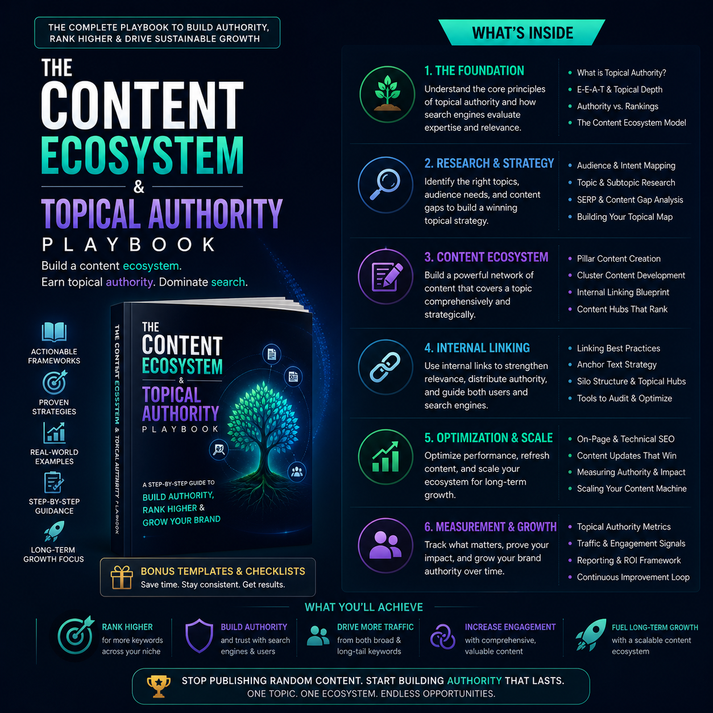
Want to master the complete system behind Publishing & Distribution: Getting Your Content Seen? Explore the full The Content Ecosystem & Topical Authority Playbook from Lywire.
Why Most Content Fails to Generate Traffic
Many businesses assume that publishing more content automatically leads to better rankings and higher traffic.
In reality, disconnected publishing creates fragmented authority.
Google increasingly rewards websites that demonstrate depth, relevance, semantic relationships, and consistent topical coverage. Random blog posts without a strategic ecosystem rarely build sustainable visibility.
Here’s where most content strategies break down:
- Publishing without topical clustering
- No content distribution strategy
- Ignoring internal content relationships
- Weak multi-platform visibility
- Lack of audience journey mapping
- Over-reliance on social algorithms
- No authority-building framework
The result?
Low rankings, inconsistent traffic, poor engagement, and wasted content investment.
What Is a Content Ecosystem?
A content ecosystem is a structured network of interconnected content assets designed to strengthen topical authority, improve discoverability, and maximize long-term organic reach.
Instead of creating standalone pieces, every article, video, newsletter, infographic, social post, or guide supports a larger authority framework.
Core Components of a Strong Content Ecosystem
- Pillar Content: Comprehensive authority pages targeting broad topics
- Cluster Content: Supporting articles addressing subtopics and search intent variations
- Distribution Channels: Platforms used to amplify visibility
- Internal Linking: Strategic pathways connecting topical relevance
- Content Repurposing: Turning one asset into multiple formats
- Audience Funnels: Guiding readers toward deeper engagement and conversions
How Smart Publishing Builds Topical Authority
Publishing frequency matters less than publishing structure.
Modern SEO success comes from demonstrating expertise across an entire topic landscape rather than targeting isolated keywords.
When your content ecosystem consistently covers related concepts, semantic entities, user intent variations, and problem-solving content, search engines begin associating your brand with authority.
This creates several powerful SEO advantages:
- Higher keyword relevance signals
- Improved crawl efficiency
- Better internal PageRank distribution
- Increased user session duration
- More topical trust from search engines
- Higher probability of ranking for long-tail queries
The strongest brands don’t publish randomly. They engineer content ecosystems designed to dominate entire search categories.
Discover how elite brands build scalable authority systems with the The Content Ecosystem & Topical Authority Playbook.
The Role of Distribution in Organic Growth
Even exceptional content needs amplification.
Distribution determines whether your content becomes discoverable or invisible.
Smart distribution strategies ensure your content reaches multiple audience touchpoints while generating engagement signals that reinforce authority.
High-Impact Content Distribution Channels
- Search engines
- Email newsletters
- LinkedIn publishing
- Reddit communities
- X (Twitter) threads
- Pinterest content distribution
- YouTube snippets and explainers
- Industry communities and forums
- Content syndication platforms
The most effective content marketers treat distribution as part of the publishing process — not an afterthought.
Common Publishing & Distribution Mistakes
Many businesses unknowingly sabotage their own growth through avoidable strategic mistakes.
1. Publishing Without Search Intent Mapping
If your content doesn’t align with user intent, rankings and engagement suffer regardless of quality.
2. Ignoring Internal Linking
Without internal linking, your content ecosystem loses semantic strength and authority flow.
3. Creating Content Without Repurposing
One blog post can become social content, newsletters, videos, threads, infographics, and lead magnets.
4. Prioritizing Quantity Over Strategic Depth
Topical authority requires comprehensive relevance, not endless shallow content.
5. Relying Solely on Google Traffic
Diversified distribution creates more resilient visibility and stronger brand authority.
Actionable Tips to Improve Content Visibility
Practical Publishing & Distribution Strategies
- Create topic clusters before publishing new content
- Build pillar pages around high-authority topics
- Repurpose every major content asset into multiple formats
- Use strategic internal links across related articles
- Optimize headlines for CTR and search intent
- Publish consistently within focused topical categories
- Distribute content across owned and external channels
- Track engagement signals, not just rankings
Consistency combined with ecosystem-driven publishing creates compounding organic growth over time.
What You’ll Learn Inside the Full Product
The complete The Content Ecosystem & Topical Authority Playbook goes far beyond basic SEO advice.
Inside, you’ll learn:
- How to engineer a scalable topical authority framework
- Advanced internal linking systems
- Semantic SEO content mapping strategies
- Content ecosystem architecture models
- Distribution workflows for maximum reach
- Authority-building publishing schedules
- Search intent optimization systems
- Multi-platform content amplification frameworks
- Content repurposing methodologies
- Long-term organic traffic scaling strategies
Ready to build a scalable authority engine instead of publishing random content? Access the complete The Content Ecosystem & Topical Authority Playbook from Lywire today.
Conclusion
Publishing content without a distribution and ecosystem strategy is like building a website no one can find.
Modern SEO success depends on interconnected authority systems, semantic relevance, strategic publishing, and multi-channel visibility.
The brands winning organic traffic today aren’t simply creating more content — they’re building intelligent ecosystems that continuously reinforce authority and discoverability.
If you want sustainable growth, scalable visibility, and stronger search performance, mastering Content Ecosystem & Topical Authority is no longer optional.
Learn the complete framework inside The Content Ecosystem & Topical Authority Playbook and start building a content system designed for long-term organic dominance.
Frequently Asked Questions
What is topical authority in SEO?
Topical authority refers to how comprehensively and consistently a website covers a specific subject area. Search engines reward sites that demonstrate expertise across interconnected topics.
Why is content distribution important?
Content distribution increases visibility, engagement, backlinks, and audience reach. Even high-quality content can fail without effective promotion and amplification.
How does a content ecosystem improve rankings?
A content ecosystem strengthens semantic relationships, improves internal linking, enhances crawlability, and signals topical expertise to search engines.
How often should I publish content?
Consistency matters more than volume. A strategic publishing schedule focused on topical depth usually outperforms random high-volume publishing.
Can small brands build topical authority?
Yes. Smaller brands can compete effectively by focusing on niche authority, strategic content clustering, and targeted distribution systems.
What’s the biggest mistake in content marketing today?
Publishing isolated content without a broader ecosystem strategy is one of the biggest reasons brands fail to generate sustainable organic traffic.