
Schema Markup Made Simple: The Structured Data Secrets That Get You Into AI Answer Boxes
The Hidden SEO Layer Most Websites Ignore
Search engines are evolving faster than ever. Traditional SEO is no longer enough to dominate visibility in modern search results. Today, platforms powered by artificial intelligence are pulling answers directly from websites and displaying them inside AI-generated answer boxes, featured snippets, voice search results, and conversational search engines.
The websites winning these placements are not simply publishing more content. They are structuring their information intelligently using schema markup and structured data.
This is where Answer Engine Optimization becomes critical.
If your website cannot clearly communicate context to search engines and AI systems, your content becomes harder to interpret, categorize, and surface in high-visibility results.
Structured data changes that.
Why Most Websites Fail to Appear in AI Answer Boxes
Many businesses assume publishing high-quality content alone guarantees rankings and visibility. In reality, AI-powered search systems prioritize content they can easily understand and verify.
Without schema markup, your website may lack the contextual signals needed for:
- Featured snippets
- AI-generated summaries
- Voice search responses
- Knowledge panels
- Rich results
- FAQ expansions
- Product visibility enhancements
Search engines rely on structured data to understand what your content actually represents.
For example:
- Is this a product?
- Is this an article?
- Is this a review?
- Is this an FAQ?
- Is this an organization?
- Is this step-by-step instructional content?
Schema markup answers these questions directly.
What Is Schema Markup in Answer Engine Optimization?
Schema markup is a form of structured data added to your website’s code to help search engines understand the meaning and relationships behind your content.
Instead of forcing Google or AI systems to “guess” what your content means, schema markup provides explicit context.
This dramatically improves your chances of appearing in:
- AI answer boxes
- Rich snippets
- Featured snippets
- Voice assistant answers
- Semantic search results
- AI-generated search overviews
In modern Answer Engine Optimization, schema markup acts like a translation layer between your website and AI systems.
Common Types of Schema Markup
- FAQ Schema — Helps questions appear directly in search results
- Article Schema — Improves article visibility and indexing
- Product Schema — Enhances ecommerce product visibility
- Organization Schema — Builds entity authority
- How-To Schema — Optimizes instructional content
- Review Schema — Displays ratings and social proof
Want to master the complete system behind Schema Markup and AI visibility?
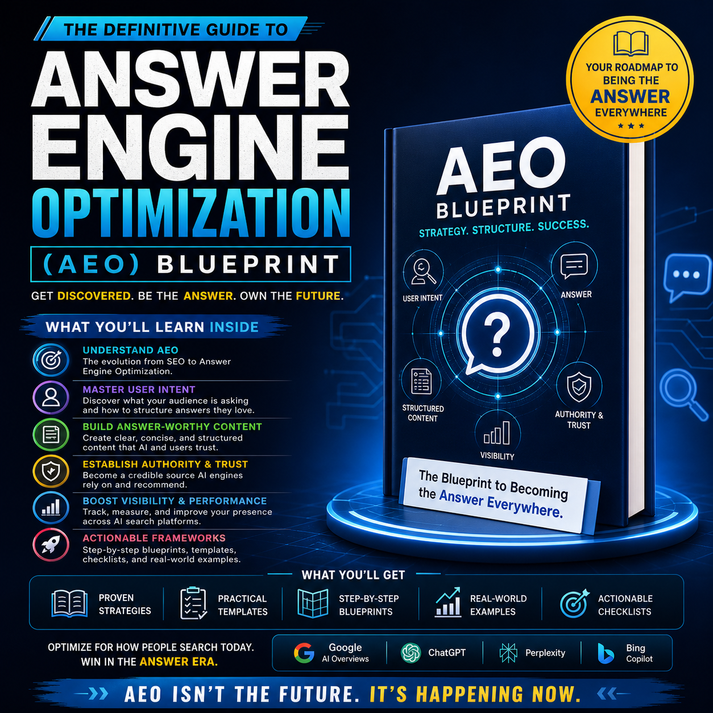
Discover the full framework inside the ANSWER ENGINE OPTIMIZATION (AEO) BLUEPRINT.
The Real Benefits of Structured Data for SEO and AI Visibility
1. Increased Click-Through Rates
Rich results stand out visually in search engines. This often leads to significantly higher click-through rates compared to standard listings.
2. Better AI Interpretation
AI systems prefer structured, organized, machine-readable information. Schema markup helps AI models confidently extract and display your content.
3. Enhanced Semantic Relevance
Structured data strengthens topical authority signals and semantic SEO relationships across your website.
4. Voice Search Optimization
Voice assistants rely heavily on structured data to provide concise answers to users.
5. Future-Proof Search Visibility
As search shifts toward AI-first experiences, websites with strong structured data foundations will have a major competitive advantage.
Common Schema Markup Mistakes That Hurt Rankings
Using Incorrect Schema Types
Applying irrelevant schema can confuse search engines and weaken trust signals.
Overusing Structured Data
Stuffing pages with excessive schema markup often creates poor implementation quality.
Ignoring Content Quality
Schema markup enhances content — it does not replace high-quality information.
Using Outdated Markup Formats
Modern SEO professionals typically use JSON-LD because it is Google’s preferred structured data format.
Practical Schema Markup Tips for Better AI Visibility
- Start with FAQ schema on educational pages
- Use Organization schema across your entire website
- Add Article schema to blog content
- Structure headings clearly using semantic HTML
- Answer questions directly and concisely
- Create entity-rich content clusters
- Validate schema using Google testing tools
These small technical improvements can dramatically improve your Answer Engine Optimization performance over time.
What You’ll Learn Inside the Full ANSWER ENGINE OPTIMIZATION (AEO) BLUEPRINT
The complete system goes far beyond basic schema markup.
Inside the full framework, you’ll discover:
- Advanced AEO strategies for AI-powered search
- Entity optimization techniques
- Semantic SEO frameworks
- AI answer box ranking systems
- Content architecture strategies
- Topical authority building methods
- Structured data implementation workflows
- Voice search optimization systems
- Modern search visibility frameworks
Ready to future-proof your SEO strategy?
Access the complete ANSWER ENGINE OPTIMIZATION (AEO) BLUEPRINT here and learn the exact frameworks modern AI-driven search engines reward.
Final Thoughts
Schema markup is no longer optional for brands serious about modern search visibility.
As AI search systems continue evolving, websites that communicate clearly through structured data will dominate answer boxes, semantic search results, and conversational search experiences.
The opportunity is massive for businesses willing to adapt early.
Whether you run a content site, ecommerce store, SaaS brand, or digital product business, implementing structured data strategically can significantly improve your visibility, authority, and organic traffic.
And this is only one layer of the complete Answer Engine Optimization ecosystem.
Want the complete AI-first SEO framework?
Explore the full ANSWER ENGINE OPTIMIZATION (AEO) BLUEPRINT and unlock advanced strategies designed for the future of search.
Frequently Asked Questions
What is schema markup in SEO?
Schema markup is structured data added to a website that helps search engines and AI systems understand the meaning and context of content more accurately.
How does schema markup help with AI answer boxes?
Schema markup provides machine-readable context that helps AI systems extract and display relevant answers directly in search results and AI-generated summaries.
What is the best schema type for blog content?
Article schema and FAQ schema are commonly recommended for educational blog content because they improve indexing, semantic understanding, and rich result eligibility.
Can schema markup improve rankings?
Schema markup itself is not a direct ranking factor, but it improves visibility, click-through rates, and search understanding, which can positively impact SEO performance.
Is JSON-LD better than other schema formats?
Yes. JSON-LD is widely preferred because it is cleaner, easier to implement, and recommended by Google for structured data implementation.
What is Answer Engine Optimization?
Answer Engine Optimization is the process of optimizing content for AI-driven search systems, featured snippets, voice assistants, and answer-based search experiences.