

Voice Search Optimization in 2026: How to Write Content That Actually Gets Spoken Out Loud
Typing is no longer the default way people search online.
In 2026, millions of users are asking AI assistants, smart speakers, mobile devices, and conversational search engines questions in natural language — expecting immediate spoken answers.
That shift has fundamentally changed SEO.
Traditional ranking strategies alone are no longer enough. If your content isn’t optimized for voice retrieval, AI summaries, and conversational answer engines, you risk becoming invisible in the fastest-growing segment of search.
This is where ANSWER ENGINE OPTIMIZATION becomes essential.
Instead of optimizing only for clicks, Answer Engine Optimization focuses on helping AI systems understand, retrieve, summarize, and verbally deliver your content to users.
Brands that master this early gain a major advantage in visibility, trust, and organic traffic.
Why Traditional SEO Is Struggling in Voice Search
Search behavior has become conversational.
Users no longer type fragmented keywords like:
- “best seo tools”
- “weather tomorrow”
- “cheap headphones”
Instead, they ask complete questions such as:
- “What’s the best SEO tool for small businesses in 2026?”
- “How does Answer Engine Optimization work?”
- “What content gets featured in AI search assistants?”
AI systems now prioritize:
- Direct answers
- Conversational structure
- Topical authority
- Semantic relevance
- Clear intent matching
- Natural language readability
Most websites still write for crawlers instead of conversational AI systems.
That creates a huge opportunity for brands willing to adapt early.
Ready to Build Content AI Search Engines Prefer?
Want to master the complete system behind Voice Search Optimization in 2026?
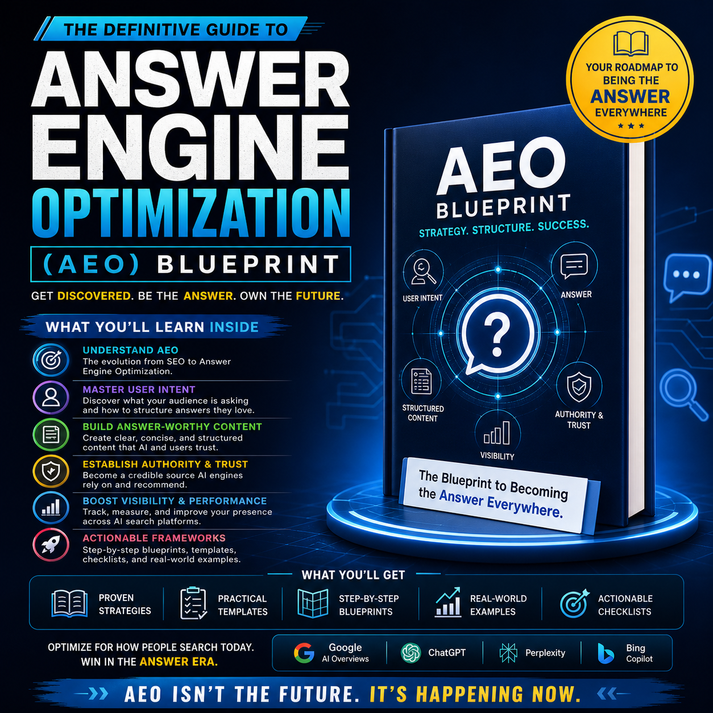
Discover the full framework inside the ANSWER ENGINE OPTIMIZATION (AEO) BLUEPRINT.
What Is Answer Engine Optimization (AEO)?
Answer Engine Optimization is the process of structuring content so AI-driven search engines, voice assistants, and conversational systems can easily retrieve and present your information as the direct answer.
Unlike traditional SEO, which focuses heavily on rankings and clicks, AEO focuses on:
- Answer clarity
- Semantic context
- Question-based content
- Featured snippet optimization
- AI readability
- Voice-friendly formatting
In practical terms, your content should sound natural when spoken aloud.
If an AI assistant reads your paragraph out loud and it sounds robotic, complicated, or overly optimized, it will likely lose preference against cleaner conversational answers.
How AI Voice Systems Choose Content
Modern AI search systems evaluate content differently than traditional search engines.
They look for:
- Direct answers within the first few sentences
- Clear heading hierarchy
- Question-and-answer structures
- Authority and topical depth
- Simple language with high informational value
- Contextual relevance across the entire article
The goal is no longer just ranking on page one.
The goal is becoming the answer itself.
How to Write Content That Gets Spoken Out Loud
1. Use Conversational Language
Voice searches sound human because users speak naturally.
Your content should mirror real conversations instead of relying on robotic keyword placement.
Write the way people actually ask questions.
2. Answer Questions Immediately
AI systems prefer concise and direct answers near the top of sections.
Start important paragraphs with the answer first, then expand with supporting details afterward.
3. Build Topic Clusters
Single articles rarely dominate voice search alone.
Brands winning in AEO create interconnected topical ecosystems that demonstrate deep expertise around a subject.
4. Optimize for Featured Snippets
Most spoken search results originate from featured snippets and structured answer blocks.
Use:
- Bullet lists
- Definitions
- Short explanatory paragraphs
- FAQ sections
- Step-by-step formatting
5. Improve Readability
If your content is difficult to read visually, it will usually sound worse when spoken aloud.
Short sentences and clean formatting improve both human engagement and AI interpretation.
Key Insight for 2026
The future of SEO is not just about ranking pages.
It’s about becoming the trusted answer source for AI systems, voice assistants, and conversational search experiences.
Common Voice Search Optimization Mistakes
- Overusing keywords unnaturally
- Writing overly technical explanations
- Ignoring conversational search intent
- Publishing shallow content without topical depth
- Neglecting FAQ optimization
- Creating content only for clicks instead of answers
Many brands still optimize for yesterday’s algorithms.
The brands dominating 2026 are optimizing for AI comprehension and conversational delivery.
What You’ll Learn Inside the Full ANSWER ENGINE OPTIMIZATION (AEO) BLUEPRINT
The complete framework inside Lywire’s premium blueprint goes far beyond basic SEO theory.
Inside the full system, you’ll learn:
- Advanced AEO content frameworks
- Voice search content architecture
- AI retrieval optimization strategies
- Featured snippet domination systems
- Conversational SEO frameworks
- Topical authority ecosystem building
- Semantic optimization techniques
- AI search ranking methodologies
- Content structuring for ChatGPT and answer engines
- Future-proof organic traffic systems
The blueprint is designed for creators, marketers, businesses, publishers, SEO professionals, and digital brands preparing for the next generation of search.
Master the Future of Search Before Everyone Else
AI-driven search is evolving rapidly, and early adopters will gain the biggest visibility advantage.
Access the complete ANSWER ENGINE OPTIMIZATION (AEO) BLUEPRINT here and learn the exact frameworks modern brands are using to dominate conversational search.
Conclusion
Voice search optimization is no longer optional.
As AI assistants and conversational search systems continue reshaping digital discovery, businesses that adapt their content strategies early will dominate future organic visibility.
The next era of SEO belongs to brands that create clear, authoritative, conversational content designed for both humans and AI systems.
ANSWER ENGINE OPTIMIZATION bridges that gap.
If you want to future-proof your traffic strategy and position your content for the next generation of search, now is the time to act.
Explore the complete system inside the ANSWER ENGINE OPTIMIZATION (AEO) BLUEPRINT.
Frequently Asked Questions
What is Answer Engine Optimization?
Answer Engine Optimization (AEO) is the process of optimizing content so AI search engines and voice assistants can retrieve and present it as direct answers to user queries.
Why is voice search important in 2026?
Voice search usage continues growing due to AI assistants, smart devices, and conversational search interfaces becoming part of everyday digital behavior.
How does AEO differ from traditional SEO?
Traditional SEO focuses mainly on rankings and clicks, while AEO focuses on answer delivery, conversational relevance, semantic understanding, and AI readability.
What type of content performs best in voice search?
Conversational, structured, concise, and question-focused content performs best because it aligns naturally with spoken search behavior.
Can small websites compete in voice search?
Yes. Smaller websites with highly focused topical authority and strong answer-focused content can outperform larger sites in niche voice search queries.
How can I learn advanced AEO strategies?
You can explore advanced frameworks, AI optimization systems, and implementation strategies inside Lywire’s ANSWER ENGINE OPTIMIZATION (AEO) BLUEPRINT.