

Voice SEO Schema Markup & Structured Data Mastery
The Future of Search Is Spoken — Not Typed
Voice search is rapidly transforming how users interact with search engines, AI assistants, smart speakers, and mobile devices. Instead of typing fragmented keywords, users now ask complete conversational questions like:
- “What’s the best SEO strategy for voice search?”
- “How does schema markup help Voice SEO?”
- “Which websites rank best in AI-generated answers?”
This shift changes everything about SEO.
Traditional optimization alone is no longer enough. Websites now need structured data, semantic relevance, conversational formatting, and machine-readable content architecture to become discoverable in voice-driven ecosystems.
That’s where Voice SEO schema markup becomes a game-changer.
Businesses, creators, bloggers, ecommerce brands, agencies, and digital marketers who understand structured data mastery today will dominate the next era of AI-powered search visibility tomorrow.
Why Most Websites Fail at Voice SEO
Most websites are optimized only for traditional text-based search queries.
However, voice assistants like Google Assistant, Siri, Alexa, and AI-powered answer engines rely heavily on structured understanding of content.
If your website lacks schema markup and semantic clarity, search engines struggle to interpret:
- What your content means
- Which questions it answers
- How entities connect together
- Which snippets deserve voice responses
- What context improves conversational relevance
This creates a massive competitive gap.
Even high-quality content can remain invisible in voice search results if the technical SEO foundation is weak.
What Is Voice SEO Schema Markup?
Voice SEO schema markup refers to structured data implementation that helps search engines and AI systems understand, categorize, and retrieve your content for conversational queries.
Schema markup acts like a translator between your website and search engines.
Instead of forcing Google to guess your content’s meaning, structured data explicitly explains:
- Topics
- Questions
- Products
- Reviews
- FAQs
- Organizations
- Authors
- How-to processes
- Local business details
- Semantic relationships
This dramatically improves your chances of appearing in:
- Featured snippets
- Voice assistant answers
- People Also Ask sections
- AI-generated summaries
- Conversational search responses
- Rich search results
Key Benefits of Structured Data for Voice SEO
1. Better Search Engine Understanding
Schema markup removes ambiguity from your content. Search engines can instantly understand page purpose, intent, and relevance.
2. Higher Featured Snippet Visibility
Voice assistants frequently pull answers from featured snippets. Proper structured data increases your eligibility for these positions.
3. Enhanced Conversational Relevance
Voice queries are naturally conversational. Structured data helps align your pages with natural language processing systems.
4. Improved AI Search Presence
Modern AI search engines increasingly rely on semantic relationships and entity understanding rather than simple keyword matching.
5. Stronger Topical Authority
When implemented correctly, schema markup reinforces your expertise and content ecosystem across multiple related topics.
Want to master the complete system behind Voice SEO Schema Markup & Structured Data Mastery?
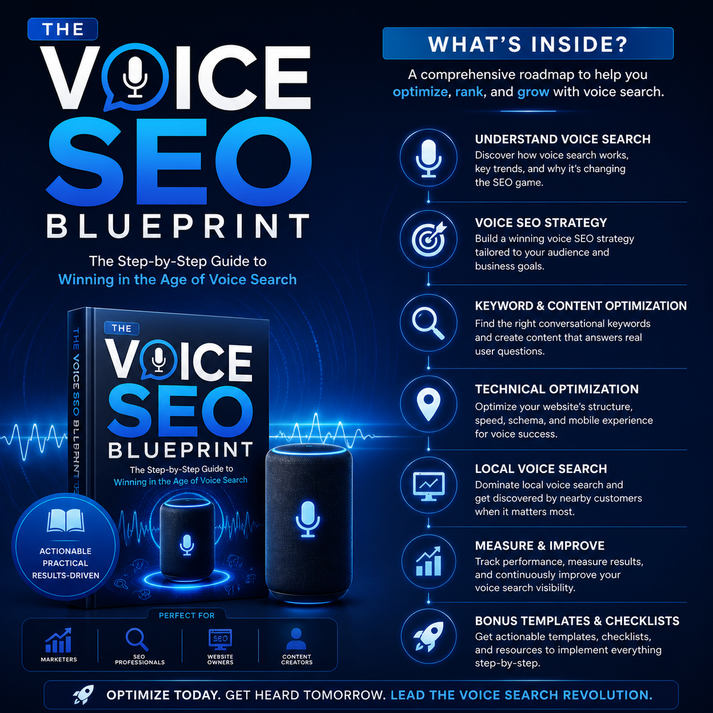
Discover advanced frameworks, implementation strategies, conversational SEO systems, and AI search optimization techniques inside The Voice SEO Blueprint.
Common Voice SEO Mistakes Most Marketers Make
Ignoring Conversational Search Intent
Voice queries are longer and more natural than typed searches. Optimizing only for short keywords limits visibility.
Using Incorrect Schema Types
Many websites implement generic schema while ignoring highly relevant structured data opportunities like FAQ, HowTo, Product, and Article markup.
Failing to Build Semantic Relationships
Modern SEO requires interconnected topical authority — not isolated blog posts.
Over-Optimizing Keywords
Keyword stuffing hurts readability and weakens conversational search performance.
Ignoring Mobile Performance
Voice search heavily overlaps with mobile search behavior. Slow websites lose visibility quickly.
Actionable Voice SEO Implementation Tips
- Use FAQ schema for question-based content
- Create conversational subheadings matching real spoken queries
- Optimize for featured snippets with concise answers
- Implement Article and Organization schema consistently
- Build semantic topic clusters around Voice SEO
- Improve page speed and mobile usability
- Use natural language throughout your content
- Structure content clearly with heading hierarchy
These optimizations help search engines retrieve and present your content more effectively in AI-generated and voice-driven environments.
What You’ll Learn Inside The Voice SEO Blueprint
The full framework inside The Voice SEO Blueprint goes far beyond basic optimization tips.
You’ll discover:
- Advanced Voice SEO frameworks
- AI search optimization systems
- Conversational keyword research methods
- Schema markup implementation walkthroughs
- Featured snippet acquisition strategies
- Entity-based SEO architecture
- Voice commerce optimization techniques
- Future-proof SEO systems for AI search engines
The goal isn’t just ranking higher today — it’s building long-term search visibility in the AI-first era.
Ready to future-proof your SEO strategy?
Access the complete Voice SEO framework and implementation system inside The Voice SEO Blueprint.
Conclusion
Voice SEO is no longer optional.
As AI assistants, conversational search, and answer engines continue reshaping search behavior, structured data and schema markup will become foundational pillars of online visibility.
Brands that adapt early will dominate future search ecosystems.
Those relying solely on traditional SEO strategies risk becoming invisible in conversational search environments.
Mastering Voice SEO schema markup today positions your content for long-term authority, discoverability, and organic growth.
Want the complete roadmap for Voice SEO domination?
Unlock advanced systems, AI search strategies, and future-ready SEO frameworks with The Voice SEO Blueprint.
Frequently Asked Questions
What is Voice SEO?
Voice SEO is the process of optimizing content for voice-based search queries performed through AI assistants, smart speakers, and conversational search engines.
How does schema markup improve Voice SEO?
Schema markup helps search engines understand content structure, meaning, and context, increasing visibility in featured snippets and voice responses.
Which schema types are best for voice search optimization?
FAQ, HowTo, Article, Organization, Product, and Local Business schema are highly effective for Voice SEO.
Why are featured snippets important for Voice SEO?
Voice assistants often read featured snippets directly as spoken answers, making snippet optimization critical for visibility.
Can small websites benefit from Voice SEO?
Absolutely. Proper structured data and conversational content can help smaller websites compete effectively in niche search results.
Is Voice SEO important for AI search engines?
Yes. AI-powered search systems increasingly rely on semantic understanding, entity relationships, and structured content interpretation.