

01
Blending Plant Setup
Understand manufacturing-unit planning, machinery considerations, plant layout and the workflow involved in lubricant blending.
⭐️⭐️⭐️⭐️⭐️ 4.9/5 1445 Reviews
500+ bought in past month
Couldn't load pickup availability
Understand the business journey from lubricant blending plant planning to product formulation concepts, investment considerations, compliance, branding and distribution.
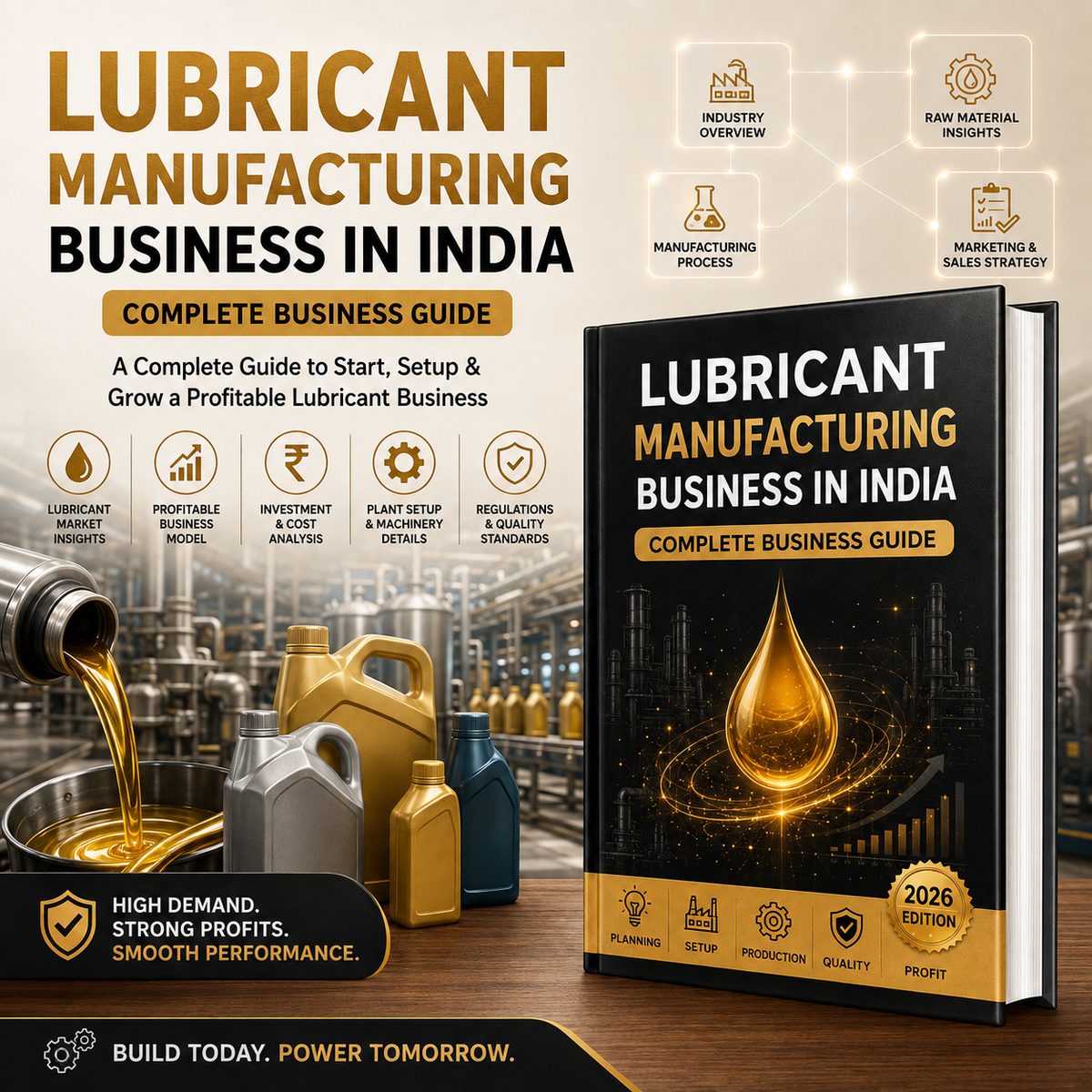
A structured guide to understanding the business, operational and commercial aspects of starting or expanding a lubricant manufacturing venture in India.
Lubricants are used across automotive, industrial, agricultural, construction and manufacturing applications. For an entrepreneur, entering this sector involves more than selecting a product and purchasing machinery. It requires an understanding of raw materials, blending operations, quality considerations, regulatory requirements, investment planning and routes to market.
This digital business guide brings these important areas together to help you understand the lubricant manufacturing ecosystem and evaluate the considerations involved before taking business decisions.
Use this guide to build a clearer understanding of the journey from base oils and additives to finished lubricant products, packaging, branding and distribution.
Get an overview of the business areas covered, including manufacturing, product categories, planning and the Indian lubricant industry.

The guide addresses the major areas involved in understanding, planning and developing a lubricant manufacturing business.
Understand manufacturing-unit planning, machinery considerations, plant layout and the workflow involved in lubricant blending.
Learn about base oils, additive packages, lubricant formulation concepts and blending technology.
Explore relevant compliance areas, including BIS-related requirements, GST, pollution-related permissions and registrations.
Understand project-cost considerations, working capital, financial planning, ROI concepts and possible funding avenues.
Explore product positioning, label design, packaging decisions and the development of a lubricant brand.
Understand dealer networks, wholesale channels, local market development and distribution planning.
Explore potential customer segments such as workshops, fleet operators, industrial buyers and OEM-related opportunities.
Build an understanding of the Indian lubricants landscape, product categories, industry participants and market positioning.
Understand the broad considerations involved in exploring international markets for Indian lubricant products.
Lubricant products serve several sectors of the Indian economy. The business opportunity can differ depending on the product category, customer segment, manufacturing capability, quality requirements and distribution model selected.
Engine oils and other automotive lubricant products serve vehicle owners, workshops, retailers, fleet operators and aftermarket distribution networks.
Industrial applications create demand for lubricant products used in machinery, manufacturing operations and equipment maintenance.
Tractors, agricultural equipment, construction machinery and commercial vehicles represent additional application areas.
Manufacturers can evaluate opportunities in private branding, dealer-led distribution, institutional supply and selected export markets.
The guide introduces the manufacturing context and important considerations associated with lubricant production.

The following topic groups describe the main business and operational areas addressed by the resource.
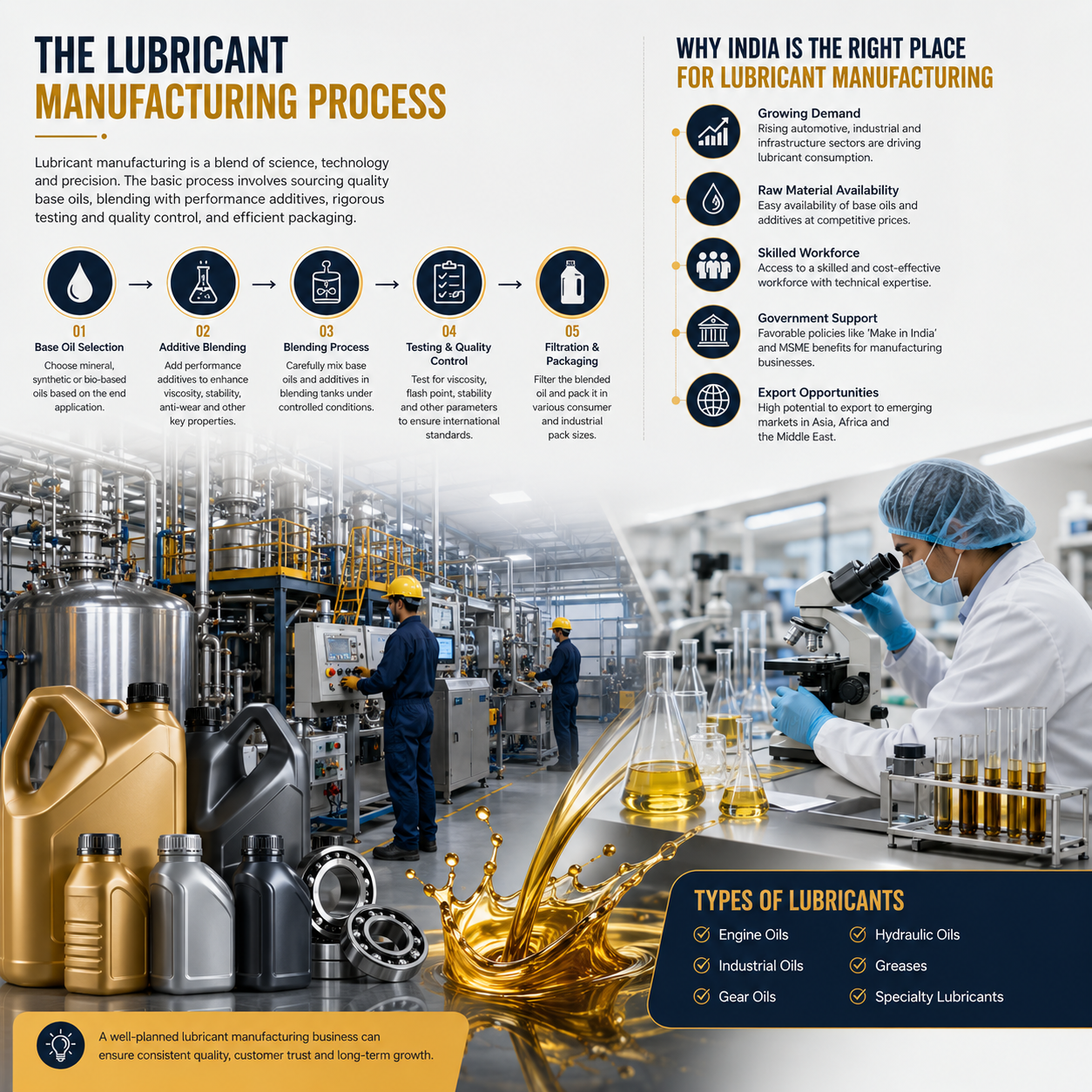
Setting up a lubricant manufacturing unit involves coordinated decisions relating to the facility, equipment, raw materials, production workflow, storage, quality and compliance.
Machinery selection and plant configuration should be based on the intended product range, capacity, technical requirements, site conditions and professional evaluation.
Raw materials play a central role in lubricant manufacturing. The guide introduces the importance of base oils, additive packages and blending technology in developing lubricant products.
Actual formulations must be developed and validated for the intended application and applicable product specifications. This business guide should not replace specialist formulation development, laboratory testing or technical validation.
Before establishing a lubricant manufacturing business, an entrepreneur should evaluate both initial investment and recurring operating requirements.
Financial planning should be adapted to the proposed production capacity, location, product mix, supplier quotations, operating model and prevailing market conditions.
A lubricant manufacturing business may need to evaluate several legal, tax, product-standard and environmental requirements. The exact requirements depend on the products, processes, capacity, facility and applicable state and local rules.
Do not assume that one standard licence checklist applies to every lubricant product or manufacturing facility. Verify current requirements with the relevant authorities and qualified professionals before commencing operations.
Entrepreneurs may evaluate suitable business-finance options depending on their eligibility, project structure, funding requirement and lender criteria.
Scheme availability, eligibility, subsidy components and application procedures can change. A scheme's existence does not mean that every applicant or project will qualify.
Manufacturing is only one part of the business. Product positioning, packaging, customer acquisition and distribution also influence how a lubricant business enters and develops its market.
Understand brand positioning, product presentation, packaging choices, labels and customer communication.
Explore dealer appointments, lubricant retailers, wholesalers and local distribution relationships.
Consider automotive workshops, service centres, fleet operators and commercial vehicle customers.
Understand potential industrial buyers, institutional supply opportunities and business-to-business sales.
Indian lubricant businesses may also evaluate international markets as part of a longer-term expansion strategy. Export planning requires careful consideration of target-market product requirements, documentation, buyer identification, pricing, logistics and applicable trade regulations.
The guide introduces export potential as one of the business development areas to understand when evaluating the sector.
This resource is intended for people who want to understand the commercial and operational aspects of the Indian lubricant manufacturing ecosystem.
Use the guide as a reference while researching the lubricant manufacturing business, evaluating setup considerations and planning your next steps.

Bring manufacturing, commercial and operational topics together in one business-focused resource.
Recognise the important areas to investigate before committing to plant setup or investment.
Develop a clearer starting point for further research, professional consultation and business planning.
This product is supplied as a digital eBook covering the lubricant manufacturing business in India.
The product is a digital guide. It should not be mistaken for a physical book, turnkey plant package, certified engineering design or guaranteed bank-loan approval document.
You may also explore these related Lywire resources for additional information on specific areas of the oil and lubricants business.
Browse more resources in Oil Business Books and MSME Business Plans.
It is a digital business guide covering important aspects of the lubricant manufacturing sector, including blending plant setup, raw materials, formulation concepts, compliance, investment planning, branding, distribution, B2B sales and export considerations.
Yes. It is intended for first-time entrepreneurs as well as existing traders, distributors, investors and technical professionals who want to understand the lubricant manufacturing business in India.
Yes. It discusses plant setup considerations, machinery, layout and operational workflow involved in a lubricant manufacturing and blending unit.
Yes. The guide introduces base oils, additive packages, formulation concepts and blending technology. Actual product formulations should be technically developed and validated for their intended applications.
The guide covers machinery and plant-setup considerations. Exact equipment specifications and selection should be determined according to the proposed product range, capacity, process and technical requirements.
It discusses investment considerations, project-cost components, working capital and financial planning. Actual project cost will depend on location, capacity, equipment selection, raw materials and operating conditions.
Yes. It introduces relevant compliance areas, including BIS-related requirements, GST, pollution-related permissions and business registrations. Requirements vary by product, process, capacity and location and should be independently verified.
The guide discusses funding options and government-scheme considerations. Loan approval, subsidy eligibility and scheme benefits are subject to the applicable rules, eligibility conditions and the assessment of the relevant lender or authority.
This product is presented as a lubricant manufacturing business guide. Do not treat it as a customised, lender-approved or bank-ready DPR unless a separate DPR deliverable is explicitly included in your order.
Yes. It discusses branding, packaging, dealer networks, wholesale channels, B2B sales, industrial customers and distribution considerations.
Yes. Export potential and international expansion considerations are included among the business topics. Actual export activity requires separate verification of destination-market requirements and documentation.
No. This is a digital eBook. No printed or physical book will be shipped.
The download link will be shared digitally after the purchase is completed, as stated in the product information.
The digital guide is intended for access on commonly used compatible devices. The exact viewing experience may depend on the device and software used.
The existing product description states that lifetime access is offered. Please refer to the applicable product and digital-access terms for the conditions of continued access.
This listing is for a digital eBook. After successful completion of the purchase, the download link will be shared digitally. No physical book or printed copy will be delivered.
Please ensure that you provide the correct contact details during checkout so that digital order communication can be completed appropriately.
Understand the key business, manufacturing, financial and commercial considerations involved in entering India's lubricant manufacturing sector.
Get the digital guide and take a more informed approach to researching your lubricant business idea.
Lubricant Manufacturing Business in India · Business Planning, Blending Plant Setup, Raw Materials, Compliance and Distribution.