1
Bargaining
Explore why bargaining power does not always belong to the side with greater resources. Understand how credible threats, incentives, expectations, and strategic positioning can influence the structure of a negotiation.
Sitewide Flat 20% discount at Checkout for above 599 INR orders.Valid till next 24 hours for E-Books Download


⭐️⭐️⭐️⭐️⭐️ 4.9/5 1445 Reviews
People's Choice
500+ bought in past month
Couldn't load pickup availability
Master the hidden architecture of every negotiation, standoff, and deal ever made.
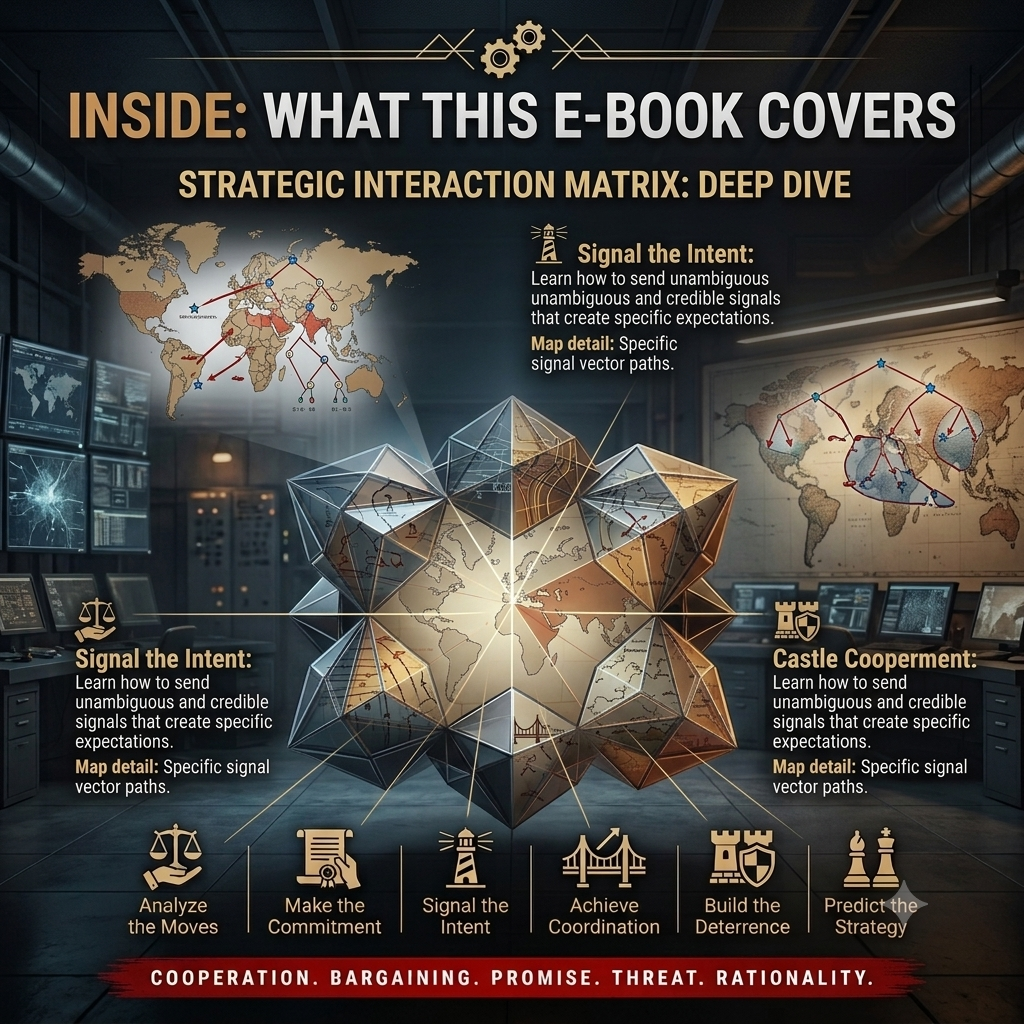
This is not just a book summary - it is a tactical intelligence briefing distilled from the influential strategic thinking of Thomas C. Schelling, Nobel Prize-winning economist and one of the major contributors to modern thinking about strategic interaction, bargaining, deterrence, and conflict.
The Strategy of Conflict Power Summary breaks down Schelling's core ideas into a practical framework designed to help you understand the strategic logic behind negotiations, conflicts, commitments, threats, cooperation, and decisions under pressure.
Explore why bargaining power does not always belong to the side with greater resources. Understand how credible threats, incentives, expectations, and strategic positioning can influence the structure of a negotiation.
Discover how commitment can change the strategic balance. Schelling's framework shows why voluntarily limiting your own future choices can sometimes alter what the other side believes you are capable or willing to do.
Understand how people can coordinate without directly communicating through shared expectations, conventions, and focal points. Learn how common patterns of behaviour can emerge from strategic interaction.
Examine how the possibility of consequences can influence behaviour before an actual conflict occurs. The framework helps explain deterrence, threats, credibility, and strategic signalling.
Schelling's approach is useful because conflict is not always about defeating another party. In many situations, the objective is to influence what another person or organisation chooses to do. That makes expectations, communication, credibility, and commitment central parts of strategy.
| Strategic Concept | What It Helps Explain | Potential Application |
|---|---|---|
| Bargaining | How parties negotiate outcomes when interests overlap and conflict. | Contracts, sales, salary discussions, partnerships. |
| Commitment | How limiting future choices can influence another party's expectations. | Negotiations, competitive strategy, strategic planning. |
| Focal Points | How people can converge on an expected solution without explicit communication. | Coordination, teamwork, market behaviour, social conventions. |
| Deterrence | How anticipated consequences can influence decisions before action occurs. | Security strategy, business rivalry, conflict management. |
Schelling's strategic concepts were developed in the context of economics, international relations, conflict, and strategic interaction. Their underlying questions are broader: How do people influence one another? When is a threat credible? How do expectations shape behaviour? And how can two parties coordinate when neither can completely control the outcome?
| Audience | Why It May Be Useful |
|---|---|
| Professionals | Executives, lawyers, sales leaders, managers, founders, and negotiators exploring strategic interaction. |
| Students | MBA, economics, business, political science, international relations, and strategy students. |
| Business Leaders | People dealing with negotiations, competitors, partnerships, contracts, and difficult decisions. |
| Strategic Thinkers | Readers interested in game theory, negotiation, conflict, decision-making, and human behaviour. |
Many conflicts are not simply contests of strength. They are interactions shaped by expectations, credibility, commitments, communication, and the choices each side believes the other side will make.
The Strategy of Conflict Power Summary gives you a focused way to explore these ideas without having to work through the entire original text first. It is designed as a concise learning resource for readers who want to understand the strategic logic behind bargaining, coordination, commitment, and deterrence.
Most strategic situations contain more than what appears on the surface. Beneath every negotiation, standoff, agreement, and competitive interaction are assumptions about what each side will do next.
Explore the ideas of Thomas C. Schelling through a focused Power Summary covering bargaining, commitment, coordination, focal points, deterrence, and strategic decision-making.
It is a concise learning resource that explains key strategic concepts associated with Thomas C. Schelling's The Strategy of Conflict, including bargaining, commitment, coordination, focal points, and deterrence.
The Strategy of Conflict was written by economist Thomas C. Schelling. The work examines strategic interaction, bargaining, conflict, and cooperation.
The summary focuses on bargaining, commitment, coordination, focal points, deterrence, credible threats, strategic interaction, and decision-making under conflict.
The underlying concepts can help readers analyse situations involving negotiation, competition, coordination, commitments, expectations, and strategic decision-making in business and other settings.
No. This product is a digital eBook and is provided electronically after the purchase is completed.
The download link is shared digitally after the purchase is completed. No physical book is shipped.
📘 Ebook & Printed Book Information
Ebook: Available for instant download after purchase.
Printed Copy: Add a printed copy of the book for just ₹2,999 extra.
If you do not receive your ebook after completing your purchase, please email us at hello@lywire.com with the following details:
Our team will verify your order and send the ebook to you as soon as possible.