

Do Affirmations, Shlokas and Mantras Work
Do Affirmations, Shlokas and Mantras Work
⭐️⭐️⭐️⭐️⭐️ 4.9/5 1445 Reviews
500+ bought in past month
Couldn't load pickup availability
Do Affirmations, Shlokas and Mantras Work?
The Honest, Research-Backed Guide to What Speaking, Chanting and Repeating Actually Does for Your Mind
A card on the bathroom mirror. A verse chanted before school. A sacred name repeated on a mala at night.
These familiar practices can hold personal, cultural, or spiritual meaning. But what does research tell us about their effects on thoughts, feelings, attention, and behaviour?
Do affirmations, shlokas and mantras work, or do we simply hope they do?
This eBook explores the question with curiosity, respect for tradition, and a careful look at the available evidence.
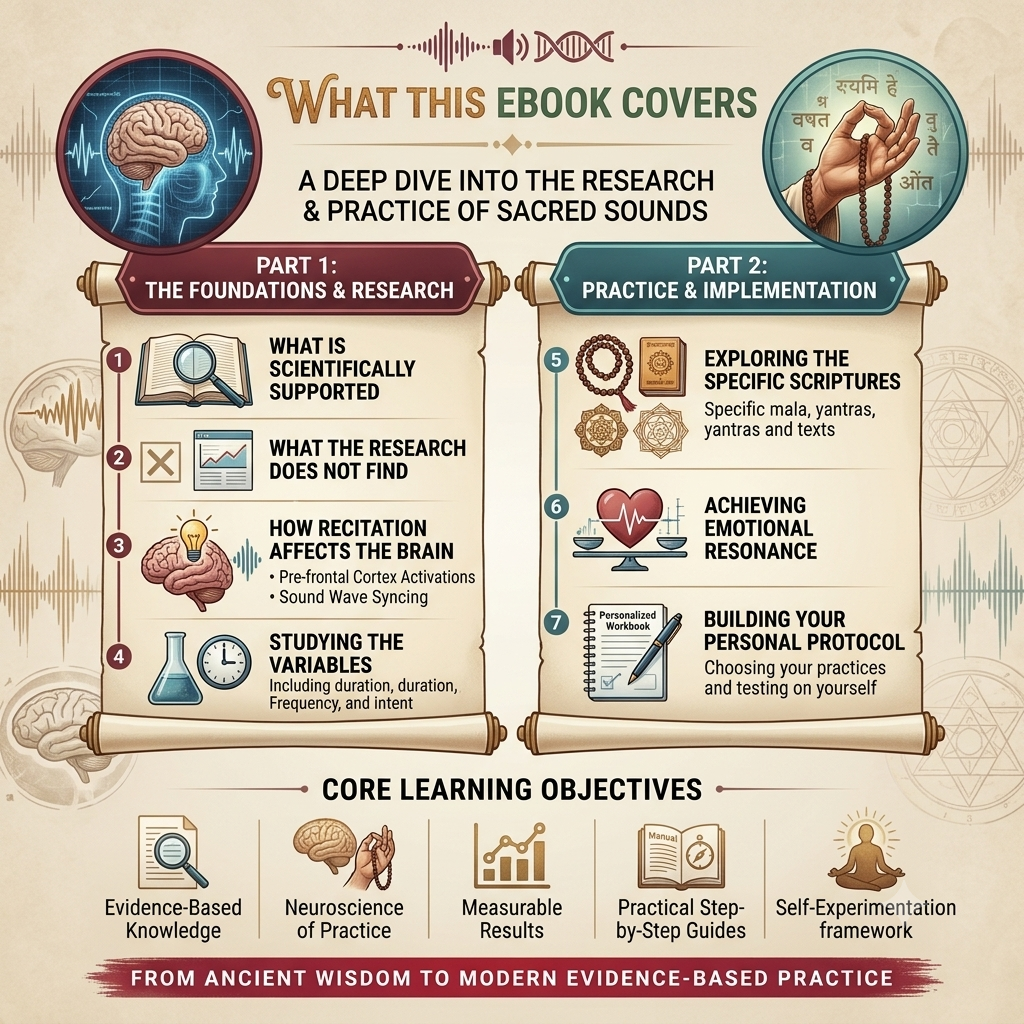
What Is This Book About?
Do Affirmations, Shlokas and Mantras Work? is a research-oriented guide for readers who want to understand repeated words and spoken practices without relying on exaggerated promises or dismissing meaningful traditions.
It explores verbal self-statements, recitation, and repetition through the lens of psychology and research on mantra-based meditation. It also encourages readers to distinguish scientific findings from personal experience, cultural meaning, and spiritual belief.
What the Evidence Supports
Explore research findings on self-affirmation, verbal self-statements, and mantra-based meditation, including potential benefits and the limits of current studies.
What the Evidence Does Not Establish
Understand why repeating a phrase cannot be assumed to guarantee confidence, success, healing, or a specific life outcome.
How to Think Critically
Learn to ask better questions about claims, research methods, personal expectations, and the difference between correlation and causation.
How to Explore Your Own Experience
Consider simple, reflective ways to observe how a chosen practice affects your mood, attention, or daily routine without treating personal experience as scientific proof.
Why You May Find This Book Useful
- You are curious about positive affirmations but tired of exaggerated self-help promises.
- You grew up with shlokas and mantras and want to explore their psychological dimensions while respecting their cultural or spiritual significance.
- You are a parent, teacher, student, or practitioner who values thoughtful explanations and evidence-aware discussion.
- You enjoy exploring the relationship between traditional practices and modern psychology.
- You want to evaluate claims for yourself rather than accepting every popular explanation at face value.
What Makes This Guide Different?

Honest, Not Hype-Driven
No promises of miracles, instant transformation, or guaranteed outcomes.
Balanced and Respectful
Approaches the subject with curiosity without assuming that every traditional claim is scientifically proven or that every practice lacks value.
Practical and Reflective
Encourages observation and thoughtful experimentation instead of relying solely on anecdotes or expectations.
Connected to Everyday Life
Starts with familiar experiences such as mirror affirmations, daily recitation, and mantra repetition.
A Research-Led Perspective
Research does not offer one simple answer for every affirmation, shloka, or mantra. Different practices have different purposes, and results depend on the method, the person, and the outcome being studied.
- Some research on self-affirmation suggests small benefits in certain contexts, including how people respond to health-related information.
- Studies of positive self-statements have also found that repeating highly positive phrases can make some people feel worse, particularly when the statements conflict sharply with their existing self-beliefs.
- Research reviews of mantra-based meditation have reported possible benefits for some mental health outcomes, while also identifying limitations in study quality and long-term evidence.
These findings do not prove that every affirmation, sacred verse, or mantra has the same effect. The guide's central question is not simply whether repetition works, but what may help, for whom, in which circumstances, and how confidently we can say so.
Who Is This eBook For?

- Readers interested in psychology, habits, and self-reflection.
- People who want a more evidence-aware perspective on affirmations and positive thinking.
- Readers exploring the psychological aspects of chanting, shlokas, and mantra repetition.
- Anyone interested in the intersection of research, everyday rituals, and personal meaning.
Ready to Explore What the Research Actually Says?
Move beyond blanket claims and easy answers. Explore the questions, examine the evidence, and develop your own informed perspective on affirmations, shlokas, and mantras.
Get your copy today and begin a more thoughtful exploration of words, repetition, and the mind.
Digital eBook | Research-oriented guide | Practical reflection
Frequently Asked Questions
1. Do affirmations really work?
It depends on the type of affirmation, the person, and the intended outcome. Research on self-affirmation has found small benefits in certain settings, but repeating positive statements does not reliably produce the same result for everyone.
2. Can positive affirmations have negative effects?
They can sometimes make a person feel worse. Research has found that strongly positive statements may be unhelpful for some people when the words feel inconsistent with their existing beliefs. A more realistic, personally meaningful statement may feel more appropriate.
3. Is there scientific research on mantras?
Yes. Researchers have studied mantra-based meditation and mantram repetition. Some reviews report potential benefits for stress, anxiety, and other mental health outcomes, but findings are not uniform and limitations in the available studies remain important.
4. Are shlokas and mantras the same as affirmations?
No. Affirmations are generally statements used to influence self-perception or focus. Shlokas are verses, often from Sanskrit literary or religious traditions, while mantras are words or phrases repeated in spiritual, devotional, or meditative practices. Their meanings and purposes can differ.
5. Does this book dismiss religious or cultural traditions?
No. The description and approach are intended to encourage respectful, critical exploration. Scientific research can examine certain psychological outcomes, but it does not measure every aspect of personal faith, cultural significance, or spiritual meaning.
6. Can this eBook replace professional mental health care?
No. It is an educational resource, not a substitute for assessment or treatment from a qualified mental health professional. Affirmations or mantra practices should not be treated as guaranteed treatments for mental health conditions.
7. Is this a physical book or a digital product?
This is a digital eBook. No physical book will be shipped. The download link will be shared after the purchase is completed.
What's included in the box
What's included in the box