

Getting To Yes Explained
Getting To Yes Explained
⭐️⭐️⭐️⭐️⭐️ 4.9/5 1445 Reviews
500+ bought in past month
Couldn't load pickup availability
Getting To Yes Explained
A Practical Guide to Principled Negotiation and Better Conversations
Ever walked away from a negotiation feeling that you gave up too much, accepted an unsatisfactory deal, or damaged a relationship just to reach an agreement?
Negotiation does not have to be a contest of pressure, stubbornness, or winning at someone else's expense. A more thoughtful approach is to understand the real concerns behind a disagreement and work toward solutions that address the interests of everyone involved.
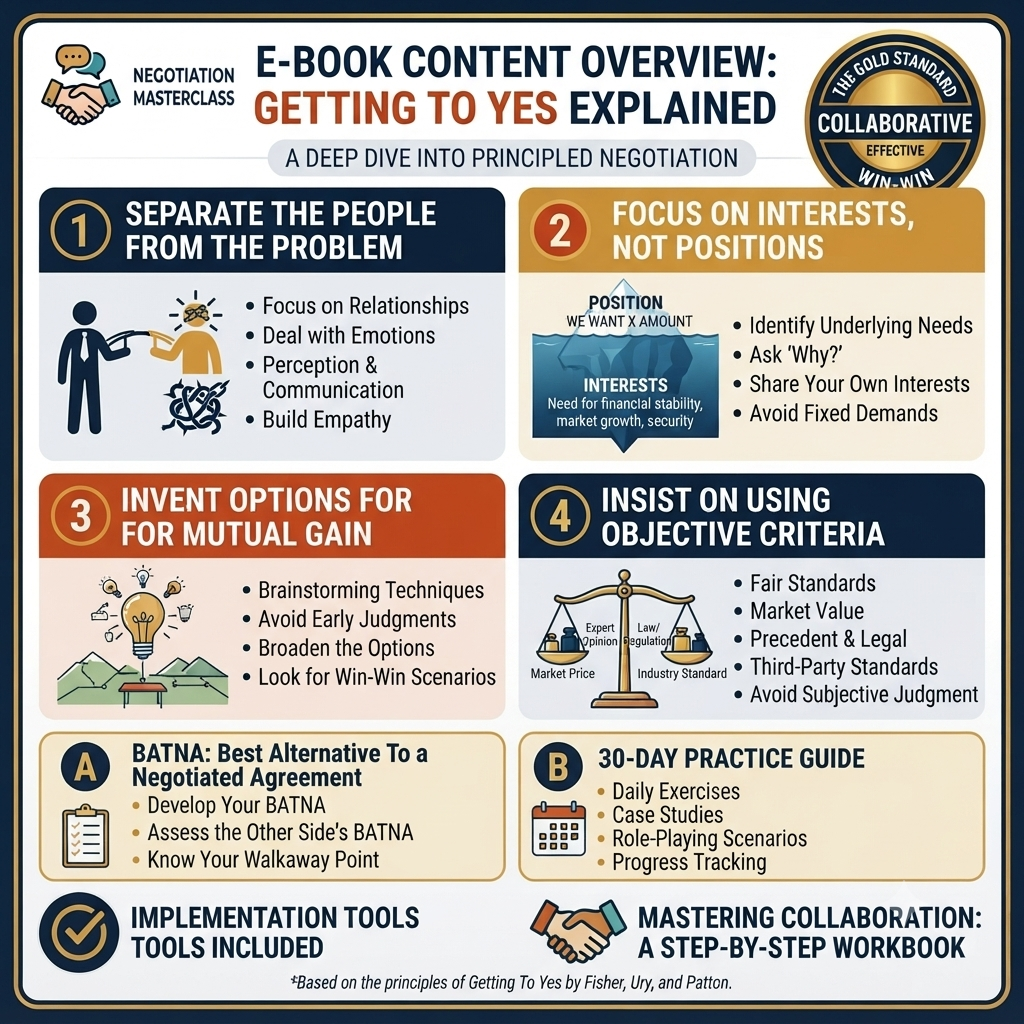
Getting To Yes Explained presents the central ideas of principled negotiation in a clear, accessible format. It turns important negotiation concepts into practical lessons you can explore and apply in professional discussions, business dealings, salary conversations, and everyday disagreements.
What You’ll Learn Inside

The Four Core Principles
Understand the four foundations of principled negotiation and how they can help you approach disagreements more constructively.
Practical, Easy-to-Follow Explanations
Explore negotiation concepts through straightforward explanations designed to make the ideas easier to understand and use in real conversations.
A Guided 30-Day Practice Plan
Build a consistent learning routine with a structured 30-day plan that encourages small steps, reflection, and practical application.
A More Constructive Negotiation Mindset
Learn to approach difficult discussions with greater preparation, composure, curiosity, and attention to the interests behind each position.
Explore the Four Principles of Principled Negotiation
1. Separate the People from the Problem
Address the issue without turning the disagreement into a personal conflict. Recognize emotions, perceptions, and communication challenges while keeping attention on the problem that needs to be solved.
2. Focus on Interests, Not Positions
Look beyond what someone says they want and explore why it matters to them. Understanding underlying needs and concerns can reveal possibilities that fixed positions often hide.
3. Invent Options for Mutual Gain
Explore multiple possible solutions before settling on one. Creative thinking can help identify alternatives that address important interests on both sides.
4. Insist on Using Objective Criteria
Use fair, independent standards such as market information, established benchmarks, expert opinion, or relevant rules to evaluate possible agreements rather than relying only on pressure or personal preference.
Why This Approach Is Different
Many people approach negotiation as a competition: one person wins while the other gives in. Principled negotiation offers another way to think about the process.
Instead of simply pushing harder for a preferred outcome, you learn to examine the underlying problem, understand the other party's concerns, consider different possibilities, and evaluate solutions against fair standards.
- Move beyond stubborn standoffs: Shift attention from fixed demands to the concerns behind them.
- Communicate more thoughtfully: Keep disagreements focused on issues rather than personal attacks.
- Explore better alternatives: Consider several possible solutions before making a decision.
- Protect important relationships: Work toward agreements without treating the other person as an opponent.
- Make more informed decisions: Use objective standards and prepare alternatives before accepting an agreement.
Who Is This Guide For?

- Professionals and managers who negotiate with colleagues, clients, teams, or leadership.
- Entrepreneurs and freelancers discussing prices, contracts, partnerships, and project terms.
- Students and job seekers preparing for interviews, salary discussions, and workplace conversations.
- Business owners who want to approach commercial disagreements more constructively.
- Anyone interested in improving communication, conflict resolution, and everyday negotiation skills.
Make the Ideas Part of Your Everyday Practice
Understanding negotiation principles is only the beginning. Applying them requires preparation, reflection, and practice.
The included 30-day practice plan is designed to help you engage with the ideas progressively and develop a more deliberate approach to challenging conversations. Use it as a structured learning companion while applying the concepts to situations relevant to your own work and life.
Ready to Approach Negotiations Differently?
Whether you are discussing a salary, working through a business disagreement, negotiating a deal, or handling a difficult conversation, a better understanding of principled negotiation can help you prepare more thoughtfully.
Get Getting To Yes Explained and begin your 30-day journey toward more confident, constructive conversations.
Digital eBook | Easy-to-follow explanations | 30-day practice plan
Frequently Asked Questions
1. What is Getting To Yes Explained?
Getting To Yes Explained is an independent digital summary and practice guide that introduces the ideas of principled negotiation associated with the book Getting to Yes. It presents key concepts in an accessible format with a guided 30-day practice plan.
2. What are the four principles of principled negotiation?
The four principles are separating the people from the problem, focusing on interests rather than positions, inventing options for mutual gain, and insisting on objective criteria when evaluating an agreement.
3. Is this guide suitable for beginners?
Yes. The guide is designed to explain negotiation concepts in straightforward language, making it accessible to readers who are new to principled negotiation as well as those looking to refresh their understanding.
4. What is included in the 30-day practice plan?
The guide includes a structured 30-day learning and practice plan intended to help readers engage with negotiation concepts progressively and reflect on how to apply them in everyday situations.
5. Can I use these negotiation principles at work and in personal life?
The principles can be explored in many settings, including salary discussions, business negotiations, workplace disagreements, partnerships, and everyday conversations. The most appropriate approach depends on the situation and the people involved.
6. Does principled negotiation guarantee a win-win outcome?
No. Principled negotiation provides a framework for exploring interests, generating options, and evaluating proposals fairly. It cannot guarantee agreement or ensure that every negotiation will produce an outcome that satisfies everyone.
7. Is this the original Getting to Yes book?
No. This is an independent summary and practice guide explaining selected ideas associated with Getting to Yes. It is not the original book, a reproduction of the original text, or an official publication by the authors or publisher.
8. Is this a physical book or a digital product?
This is a digital eBook. No physical book will be shipped. The download link will be shared after the purchase is completed.
What's included in the box
What's included in the box