

01
A Fascinating Literary Mystery
Explore a Sanskrit astrological and calendrical treatise traditionally attributed to Kālidāsa, and examine why its authorship and historical date have attracted scholarly scrutiny.
⭐️⭐️⭐️⭐️⭐️ 4.9/5 1445 Reviews
500+ bought in past month
Couldn't load pickup availability
Unmasking the Book That Wore Sanskrit's Greatest Name
Did Kālidāsa really write it?
Twenty-two chapters. One legendary royal court. One immortal poet's name attached to a fascinating Sanskrit text.
But what does modern scholarship actually say? Step behind the curtain of one of the most intriguing attribution debates in Indian literary and intellectual history. Explore the text, examine the arguments, and discover how a literary work became closely associated with the celebrated Navaratna — the Nine Gems of Vikramāditya's court tradition.
More than a summary of an old Sanskrit work, this explainer investigates the questions surrounding its identity, historical setting and lasting reputation.
Explore a Sanskrit astrological and calendrical treatise traditionally attributed to Kālidāsa, and examine why its authorship and historical date have attracted scholarly scrutiny.
Discover the text's famous association with the Navaratna tradition and consider how literary works helped shape the enduring image of Vikramāditya's celebrated court.
Understand modern scholarly arguments alongside traditional accounts and defences. Compare the reasoning, identify the evidence, and form your own informed view.
Meet the Kālidāsa known through celebrated Sanskrit classics and examine the literary and historical questions involved in attributing another work to his name.

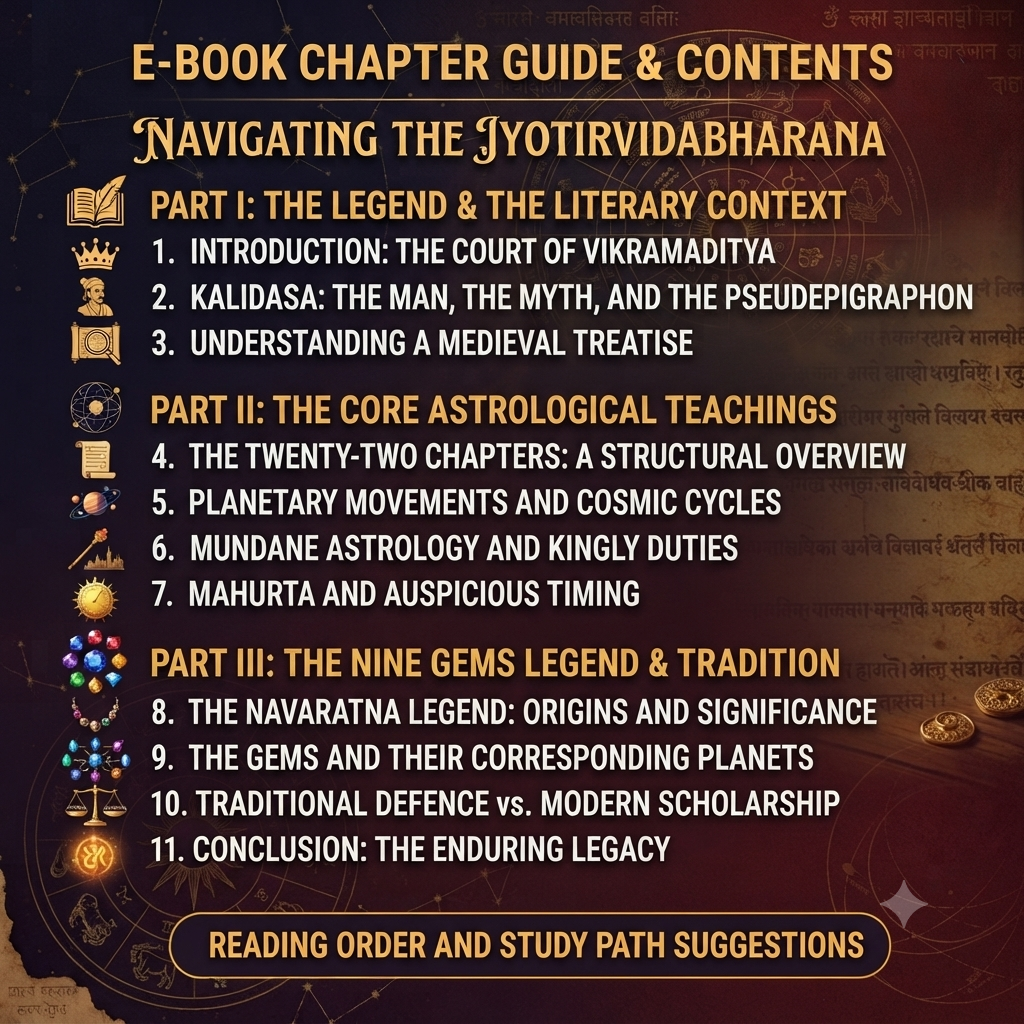
Follow a structured journey through the text and the questions that surround it.
Traditional attribution, manuscript evidence and modern historical dating are not always the same thing. This guide encourages readers to distinguish what a text claims about itself from what surviving evidence and scholarly analysis can establish.
Explore the work as a Sanskrit jyotiṣa text, including its broad range of subjects and its organisation into 22 chapters. Understand why it is studied as part of the history of traditional Indian astral and calendrical literature.
Examine the relationship between the work's traditional attribution, the celebrated name of Kālidāsa and the stories associated with Vikramāditya's court. Learn why reputation and historical authorship need to be examined separately.

Complex historical and textual questions are organised into an accessible reading journey.
Explore traditional accounts while learning to assess historical claims with care.
Understand the difference between attribution, manuscript history, dating and scholarly interpretation.
Build a foundation for exploring Sanskrit literature, jyotiṣa texts and the history of Indian intellectual traditions.
Some names carry a book further than the book deserves. Come discover the story behind this one.
Explore the text, investigate the attribution and uncover the fascinating story behind Jyotirvidabharana. Get your digital copy of Jyotirvidabharana Explained today.
Jyotirvidābharaṇa is a Sanskrit work associated with traditional Indian astrology and related calendrical subjects. It is organised into 22 chapters and is traditionally attributed to the poet Kālidāsa.
The authorship is debated. Although the work is traditionally attributed to Kālidāsa, modern scholarship has questioned whether it was written by the famous classical poet. This guide examines the attribution debate and the evidence behind different interpretations.
The work contains a celebrated reference associated with the Nine Gems, or Navaratna, of Vikramāditya's court. This passage is important to the history of the tradition, although the historical development of the Navaratna story requires careful examination.
The work is organised into 22 chapters, covering a range of subjects associated with traditional jyotiṣa literature and related practices.
Yes. The explainer is designed to introduce the subject in a clear and structured way, making its central questions accessible to curious readers as well as students of Sanskrit and Indian literary history.
Its purpose is to help readers understand the debate. It presents the traditional attribution and the questions raised by modern scholarship so readers can assess the arguments rather than relying on an unsupported conclusion.
This product focuses on the history, authorship, structure and interpretation of the Jyotirvidābharaṇa text. It is an explanatory guide to a historical Sanskrit work, not a personalised astrology or horoscope service.
Students of Sanskrit, researchers, readers of Indian literary history, jyotiṣa enthusiasts and anyone interested in the origins of historical and literary traditions may find it useful.
No. This is a digital eBook. The download link will be shared after the purchase is completed.