

Programmatic SEO Without Spam Handbook
Programmatic SEO Without Spam Handbook
⭐️⭐️⭐️⭐️⭐️ 4.9/5 1445 Reviews
500+ bought in past month
Couldn't load pickup availability
Programmatic SEO Without Spam Handbook
Scale Smarter. Publish with Confidence.
Before you build 1,000 pages, ask one important question: does every page genuinely deserve to exist?
Programmatic SEO can help websites organize and publish useful pages at scale when each page serves a distinct purpose. But automation without editorial judgment can create repetitive pages that offer little value to visitors.
The Programmatic SEO Without Spam Handbook takes a quality-first approach. It focuses on the decisions, checks, and safeguards that help teams evaluate page value before scaling content production.
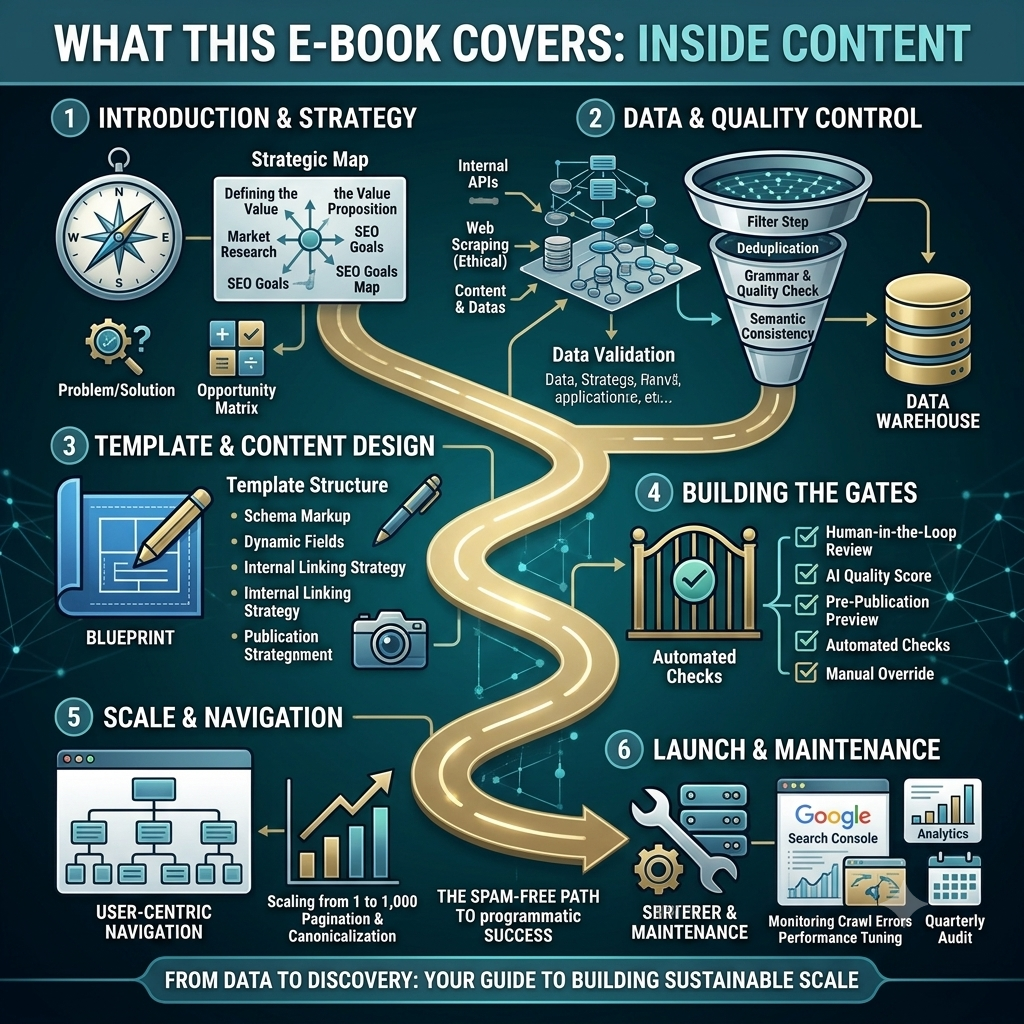
What’s Inside the Handbook?

Page-Worthiness Decisions
Learn to assess whether a proposed page addresses a real user need and offers enough distinct information to justify publication.
Data Quality and Suitability
Evaluate whether your structured data is accurate, relevant, fit for purpose, and appropriate to use before it becomes part of a page.
Templates Built Around Answers
Approach page templates from the user's question or task, rather than simply inserting keywords and data fields into a generic layout.
Publication and Indexing Gates
Explore quality-control checkpoints to help identify incomplete, duplicative, low-value, or unsuitable pages before publication and indexing.
Useful Navigation Structures
Plan navigation and internal relationships that help visitors discover relevant information and understand how pages connect.
Ongoing Quality Management
Understand why a programmatic SEO system needs continued review, maintenance, and improvement after launch.
A Practical Guide, Not a Collection of SEO Hacks
This handbook focuses on the reasoning behind programmatic SEO decisions and turns those ideas into small, checkable actions. The aim is to help you develop a repeatable workflow without treating page volume as the measure of success.
- Documented search guidance: Search-related guidance is distinguished from other types of recommendations.
- Editorial methods: Practical approaches for evaluating page value, data, templates, and quality controls.
- Clearly labelled fictional examples: Illustrations are separated from documented guidance so readers can tell the difference.
What You’ll Be Able to Work Towards

- Evaluate whether a proposed page offers a distinct and useful answer.
- Audit structured data for accuracy, suitability, and usage rights.
- Design page templates around the needs of real users.
- Establish review and publication checkpoints for programmatic content.
- Plan internal navigation around meaningful relationships between pages.
- Monitor and maintain page quality as your website grows.
Who Is This Handbook For?
This guide is intended for SEO professionals, content strategists, website owners, developers, agencies, and digital teams working with structured data and large collections of pages.
It is especially relevant when your business has a genuine reason to publish many distinct pages, supported by useful information that helps people complete a task or make a decision.
The Core Principle
Choose the real user problem. Verify the evidence. Improve one defensible part of the system at a time.
Scaling responsibly starts with usefulness, not a page-count target. Each page should contribute something meaningful, and each part of the workflow should support accuracy, clarity, and a better experience for visitors.
Ready to Build Programmatic SEO More Responsibly?
Use a more deliberate approach to page creation, data quality, templates, publication controls, and long-term maintenance.
Get your copy of the Programmatic SEO Without Spam Handbook and build at scale without losing trust.
Digital eBook | Practical workflow guidance | Keep for future reference
Frequently Asked Questions
1. What is programmatic SEO?
Programmatic SEO is an approach to creating and managing many search-oriented pages using structured data, reusable templates, and repeatable workflows. Each page should still provide distinct value and meet a real user need.
2. Does publishing more pages automatically improve SEO?
No. A larger page count does not automatically improve rankings. Pages created primarily to manipulate search rankings, without meaningful value for users, may fall within Google's scaled content abuse policy.
3. How can I reduce the risk of creating low-value pages?
Define the user need for each page type, verify the source data, provide a useful and distinct answer, review templates, and establish quality checks before publishing. Pages that do not provide sufficient value may need to be improved or excluded from search.
4. Can programmatic SEO use automation or AI?
Yes. Automation and AI can support research, data processing, drafting, and quality checks. The important consideration is whether the final pages are useful, accurate, original, and created to help people rather than primarily to manipulate search rankings.
5. Who should consider this handbook?
It is intended for SEO professionals, agencies, developers, content teams, and website owners who manage structured data or need to evaluate the quality of pages produced at scale.
6. Is this a physical book or a digital product?
This is a digital eBook. No physical book will be shipped. The download link will be shared after the purchase is completed.
What's included in the box
What's included in the box