

Manufacturing
Evaluate a production-led business, including setup considerations, process requirements, quality controls and the operating needs associated with manufacturing.
⭐️⭐️⭐️⭐️⭐️ 4.9/5 1445 Reviews
500+ bought in past month
Couldn't load pickup availability
Exploring stevia, erythritol, sucralose, monk fruit or other sweetener products as a business opportunity? Start with a structured plan that brings technical, regulatory, financial and commercial considerations together.
The Sugar Alternatives MSME Business Plan is designed for Indian entrepreneurs evaluating a sweetener-related venture. It helps you examine possible business models, understand the planning areas involved and organise the questions that need answers before committing capital.

The sugar alternatives sector includes different ingredient categories and business approaches. An entrepreneur may consider manufacturing, formulation, repackaging, private labelling or distribution, depending on the product, resources, technical capability and target customers.
This business plan provides a structured starting point for evaluating those possibilities rather than treating every sweetener business as the same type of operation.
The plan introduces several categories of sugar alternatives and sweetener products that entrepreneurs may consider when researching a business opportunity.

Not every entrepreneur needs to begin with the same operating model. The guide introduces five possible routes so you can assess which approach aligns with your resources, capabilities and commercial objectives.
Evaluate a production-led business, including setup considerations, process requirements, quality controls and the operating needs associated with manufacturing.
Explore formulation and blending considerations, ingredient suitability and the checks needed when developing a sweetener product or blend.
Consider sourcing, packaging, product information and the responsibilities involved in preparing sweetener products for sale under a chosen brand.
Understand the planning considerations involved in working with suppliers or manufacturers to offer products under your own label.
Assess distribution and resale opportunities for business customers, retailers or direct-to-consumer channels.
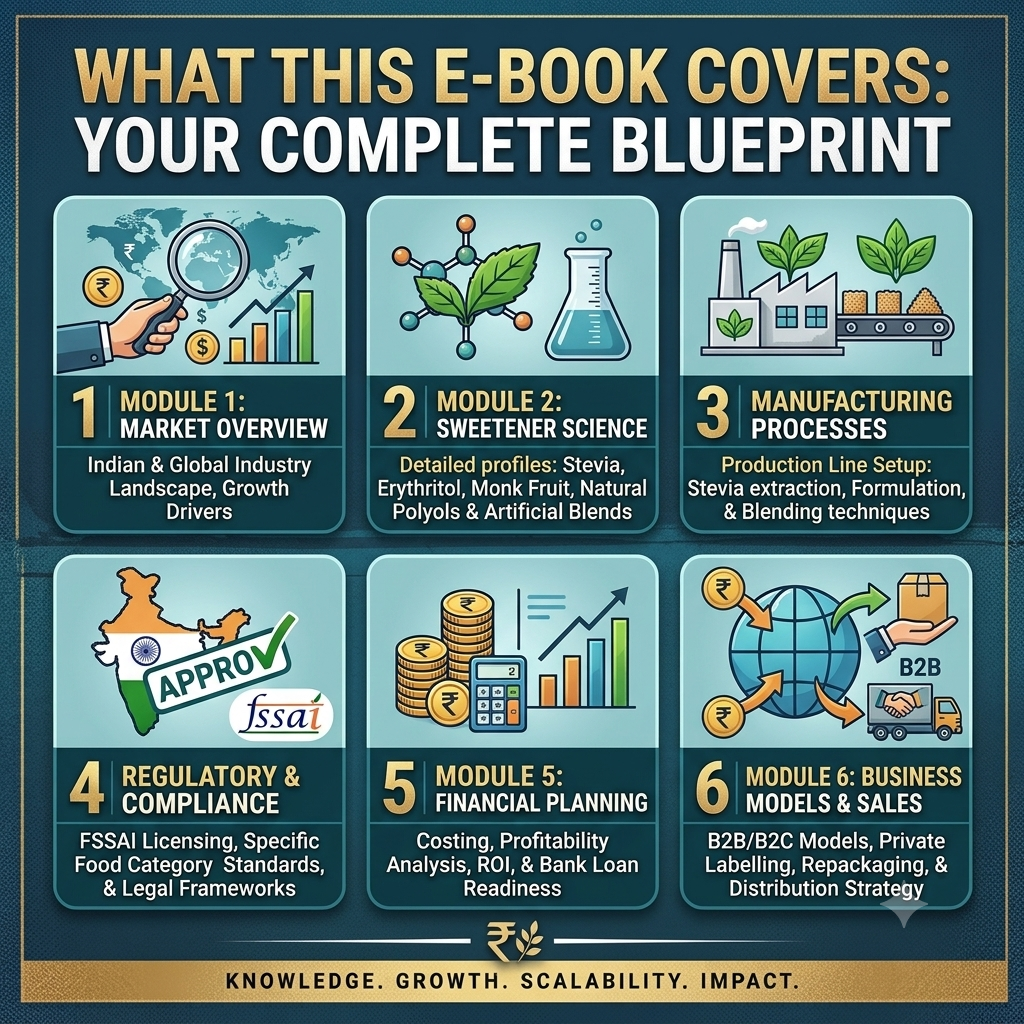
Starting a sweetener-related business involves more than selecting an ingredient. The plan brings the major business-planning areas into one organised framework.
Review the process and setup considerations relevant to the business model you intend to pursue.
Identify compliance topics to investigate, including food-business licensing, product standards, additives, packaging and labelling.
Organise project-cost assumptions, working-capital requirements, pricing considerations and potential returns for evaluation.
Consider customer segments, sourcing, distribution channels and the routes through which your proposed product may reach the market.
Compare manufacturing, formulation, repackaging, private labelling and resale before deciding which route to investigate further.
Bring key assumptions and planning information together for discussions with lenders, suppliers and potential business partners.
The financial side of a sugar alternatives business depends on the product category and operating model. A manufacturing unit, a formulation business and a repackaging or resale operation may have very different capital and working-capital requirements.
Use the plan’s financial framework to organise the assumptions behind your proposed project. Before making an investment decision, validate the numbers against current supplier quotations, premises costs, operating expenses, packaging requirements and your intended route to market.
Sweetener products are connected to food regulations, so compliance should be considered early in the business-planning process. The applicable requirements depend on the ingredient, intended use, product category and the activity being carried out.
Do not rely on a general checklist alone. Confirm the latest requirements with the relevant authorities or qualified professionals before beginning commercial operations.
The guide is intended for people researching or preparing to enter the sugar alternatives and sweetener business, as well as businesses considering a new product category.

A business plan becomes more useful when you turn its planning topics into decisions that can be checked against your own project.
Researching a new business can quickly become fragmented. One source may discuss ingredients, another may focus on regulations, while financial and commercial decisions are left to be worked out separately.
This plan brings technical, regulatory, financial and commercial planning topics together in one digital resource. It gives you a framework to organise your research, compare possible routes and prepare more focused questions before approaching suppliers, lenders or potential customers.
It is particularly useful when you want to move beyond a broad business idea and start examining what your proposed sweetener venture would actually require.
Explore the business models, planning considerations and key questions involved in a sweetener-related venture in India.
If you are researching manufacturing, formulation, repackaging, private labelling or resale, use the Sugar Alternatives MSME Business Plan to organise your next steps.
Common questions about the Sugar Alternatives MSME Business Plan and the business-planning topics it covers.
It is a digital business-planning guide for Indian entrepreneurs exploring sweetener-related businesses. It brings together technical, regulatory, financial and commercial planning topics to help evaluate a proposed venture.
The plan introduces stevia, erythritol, sucralose, monk fruit, natural polyols and artificial sweetener blends. The permitted ingredients and uses for a specific product should always be verified against current applicable regulations.
Yes. It introduces manufacturing, formulation, repackaging and rebranding, private labelling, and B2B or B2C resale as possible routes to evaluate.
It is designed for aspiring entrepreneurs as well as existing businesses researching a sweetener-related opportunity. It provides a structured starting point for evaluating the major technical, regulatory, financial and commercial considerations.
The plan includes a financial-planning framework for examining project costs, working capital, pricing assumptions and potential returns. Actual figures should be customised using current quotations and project-specific information.
The plan addresses regulatory awareness, including food-business licensing, product standards, additives, packaging and labelling. The exact requirements depend on the product and activity, so current rules must be checked before starting operations.
The guide is presented in a bank-oriented planning format to help organise project information. It is not a bank approval or endorsement. A lender may require updated financial figures, supporting quotations, applicant documents and a customised project report in its prescribed format.
No. Loan and subsidy eligibility depends on the applicable scheme, applicant profile, project details and the relevant authority or lender. Business performance depends on costs, demand, pricing, competition and execution. No approval or financial outcome is guaranteed.
This is a digital eBook. No physical book will be shipped.
The download link will be shared digitally after the purchase is completed.
Browse other business plans and project-planning resources available on Lywire.