

The Ego and the Id Explained
The Ego and the Id Explained
⭐️⭐️⭐️⭐️⭐️ 4.9/5 1445 Reviews
500+ bought in past month
Couldn't load pickup availability
Understand Freud's influential theory of the human mind, personality and unconscious processes.
Why do our desires sometimes conflict with our decisions? Why do we experience inner struggles between what we want, what we believe and what we think we should do?
In The Ego and the Id, Sigmund Freud explored these questions through one of the most influential theoretical frameworks in classical psychoanalysis.
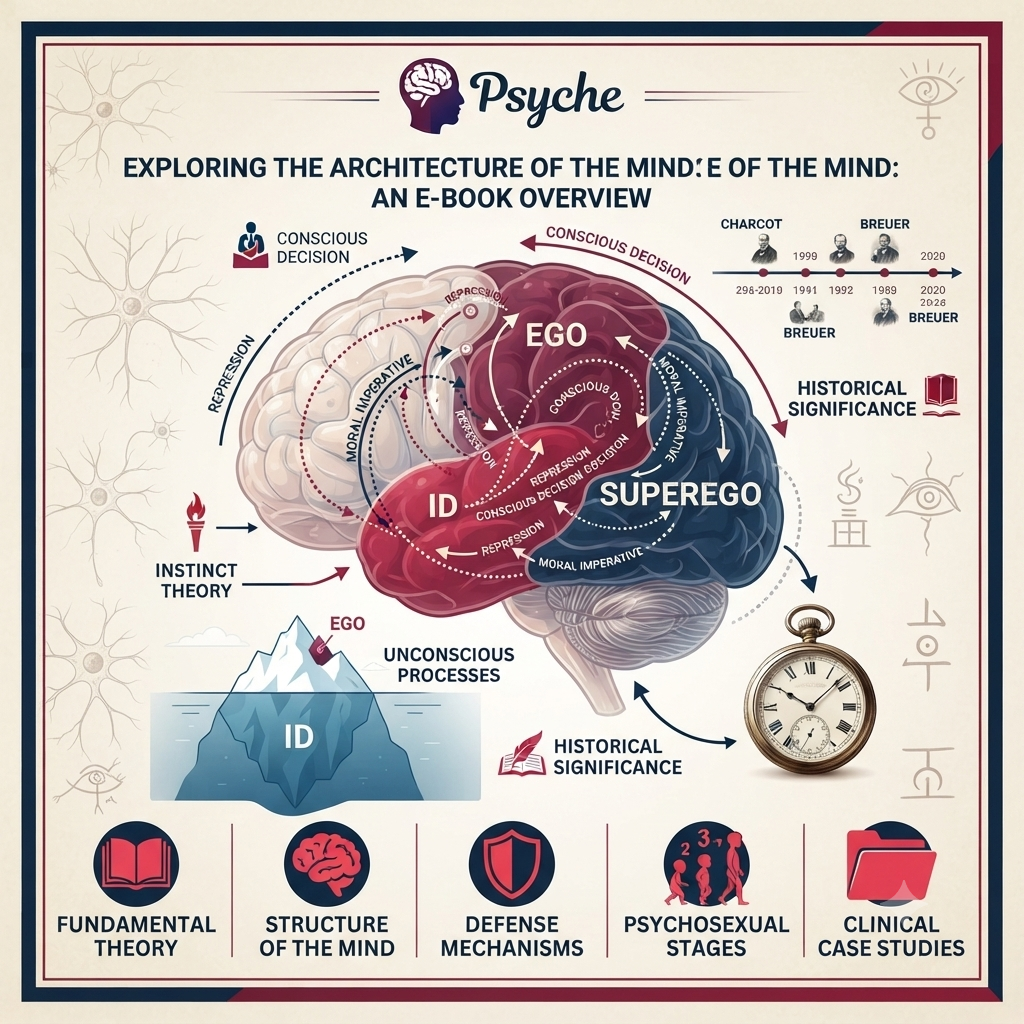
The Ego and the Id Explained is an accessible and critical educational companion that explores Freud's concepts of the id, ego and superego, unconscious mental processes, instinct theory and the historical significance of psychoanalysis.
Whether you are a psychology student, an educator or simply curious about human behaviour, this guide offers a structured introduction to ideas that have shaped discussions about personality and the human psyche.
What makes this eBook useful?
It brings together explanations of Freud's major psychoanalytic concepts with historical context and critical perspectives, making a complex area of psychological thought easier to explore.
- Understand the id, ego and superego.
- Explore the relationship between conscious and unconscious processes.
- Examine Freud's theories of instinct and human motivation.
- Consider the historical influence and limitations of psychoanalysis.
- Build foundational knowledge of classical Freudian theory.

What Is The Ego and the Id Explained?
The Ego and the Id Explained is a digital educational guide that introduces readers to Sigmund Freud's structural model of the psyche and his broader psychoanalytic ideas.
Freud proposed that human mental life involves interacting psychological forces. His structural model describes these through three theoretical concepts: the id, ego and superego.
This guide explains the underlying ideas in an approachable format while encouraging readers to consider the historical context, interpretation and criticism surrounding Freud's work.
Rather than treating psychoanalytic concepts as established physical structures of the brain, the guide approaches them as part of Freud's influential theoretical framework.
Understand the Three Parts of Freud's Structural Model
One of Freud's best-known contributions to psychoanalysis is his structural model of the human psyche.
1. The Id – Instinctual Drives
Explore the concept Freud used to describe instinctual desires and impulses, including the pursuit of immediate satisfaction.
2. The Ego – Reality and Balance
Understand how Freud described the ego as mediating between instinctual demands, external reality and competing psychological pressures.
3. The Superego – Internalised Ideals
Examine the role Freud assigned to internalised moral standards, ideals and expectations in the development of the psyche.
4. Their Interaction
Understand how these theoretical components interact and contribute to Freud's explanation of inner psychological conflict.
What You Will Explore Inside This eBook
The guide covers several important dimensions of Freudian psychoanalysis.
The Unconscious Mind
Explore Freud's account of unconscious mental processes and their relationship to thoughts, memories, desires and internal conflicts.
Freud's Instinct Theory
Examine the instinctual forces and drives Freud believed influenced human behaviour, including ideas developed in his later theoretical work.
Psychological Conflict
Understand how competing desires, moral expectations and external realities feature in Freud's explanation of the human psyche.
Critical Perspectives
Consider the limitations, scholarly debates and questions surrounding psychoanalytic theory.
Historical Significance
Discover how Freud's ideas influenced discussions in psychology, psychoanalysis, literature and wider cultural thought.
Take a Look at the eBook
Explore the product cover and an illustrative preview of the concepts presented in the guide.


Why Choose This Psychology Guide?
Accessible Explanations
Approach complex psychoanalytic terminology through a more structured and readable educational resource.
Balanced Coverage
Explore Freud's contributions alongside historical context, criticism and continuing scholarly debates.
Foundational Understanding
Become familiar with the terminology and theoretical foundations of classical psychoanalysis.
Self-Paced Learning
Read at your convenience and revisit important concepts whenever you want to strengthen your understanding.
Who Should Read The Ego and the Id Explained?
This digital guide is intended for readers interested in psychology, human behaviour and the history of psychoanalytic thought.
- Psychology students: Build an understanding of Freud's structural model of the psyche and classical psychoanalysis.
- Teachers and educators: Explore an accessible resource for introducing important concepts in the history of psychology.
- Self-development readers: Learn about theoretical explanations of unconscious processes, desires and internal conflicts.
- Writers and researchers: Explore ideas concerning personality, identity, motivation and human behaviour.
- Curious readers: Discover the historical significance of one of the influential approaches to understanding the human mind.
Why Is Freud's Theory of the Mind Still Studied?
Sigmund Freud's psychoanalytic theories have played an important role in the history of psychological thought.
His ideas about the unconscious mind, psychological conflict and personality influenced later discussions across psychology, philosophy, literature and cultural studies.
Although many aspects of classical psychoanalysis remain contested and are not accepted as established scientific explanations, understanding Freud's work remains valuable when studying the development of psychological ideas.
This guide provides an opportunity to explore those ideas while maintaining a critical perspective on their interpretation and limitations.
What Will You Receive After Purchasing?
Your Digital Product
- Product: The Ego and the Id Explained.
- Format: Digital eBook.
- Delivery: Digital access following successful order completion.
- Physical shipment: No physical book is included in the digital eBook purchase.
The product page currently describes the eBook as an instant download. Follow the download instructions displayed during or after checkout.
What if you do not receive your eBook?
If you complete your purchase but cannot access your digital product, contact the LyWire support team at:
- Email: hello@lywire.com
- Provide: Your order number.
- Provide: Your registered email address.
- Provide: Your WhatsApp contact number.
The support team can verify your order and assist with digital delivery.
Explore the Hidden Architecture of the Human Mind
Discover Freud's influential ideas about the id, ego, superego, unconscious processes and psychological conflict.
Build your understanding of classical psychoanalysis through an accessible and critical educational guide.
Get The Ego and the Id Explained and explore the foundations of Freud's theory of the human psyche.
Digital eBook | Educational resource | Self-paced reading
Frequently Asked Questions
1. What is The Ego and the Id Explained about?
It is an educational companion to Sigmund Freud's psychoanalytic ideas. It explores the id, ego, superego, unconscious mental processes, instinct theory and the historical influence and criticism of psychoanalysis.
2. What are the id, ego and superego in psychology?
In Freud's structural model, the id represents instinctual drives, the ego deals with external reality and competing demands, and the superego represents internalised ideals and moral standards. They are theoretical concepts within psychoanalysis rather than separate physical brain structures.
3. Is this eBook suitable for psychology beginners?
Yes. The guide is designed to make important Freudian concepts more approachable for readers interested in classical psychoanalysis, including those who are beginning to study the subject.
4. Does this guide explain the unconscious mind?
Yes. It explores Freud's account of unconscious mental processes and their relationship to desires, memories, instinctual drives and internal psychological conflicts.
5. Does the eBook discuss criticism of Freud's theories?
Yes. It takes a critical perspective, encouraging readers to consider the historical importance, limitations and continuing scholarly debates surrounding Freud's psychoanalytic ideas.
6. Is this a self-help or mental health treatment book?
No. This is an educational guide to psychoanalytic concepts and the history of psychological thought. It does not provide mental health diagnosis, therapy or individual treatment.
7. Is this a physical book or a digital eBook?
The product described here is a digital eBook. No physical book is included in the standard digital purchase.
8. How will I receive my eBook after purchasing?
The product page describes the eBook as available for instant download after purchase. Follow the download instructions provided through the order process. If you cannot access your purchase, contact hello@lywire.com with your order number and registered contact details.
9. Can Freud's id, ego and superego be considered scientifically established brain structures?
No. The id, ego and superego are theoretical components of Freud's psychoanalytic framework. They should not be interpreted as independently established physical structures of the brain or as a modern clinical diagnostic system.
Important Educational Disclaimer
Educational use: This eBook is intended for educational and informational purposes, particularly for understanding classical psychoanalytic theory and its historical development.
Scientific context: Freud's theories remain subjects of scholarly discussion and criticism. The concepts discussed in this guide are theoretical constructs within psychoanalysis and should not be treated as universally established scientific facts.
Mental health: This resource does not provide professional mental health advice, psychological assessment, diagnosis or treatment. Consult a qualified mental health professional for individual concerns.
Digital product: This listing is for a digital eBook. No physical book is shipped as part of the standard digital purchase. Please review the product and applicable purchase policies before ordering.
What's included in the box
What's included in the box