

Your Biggest Enemy Is Your Uncontrolled Mind By Sourabh Dubey Explained
Your Biggest Enemy Is Your Uncontrolled Mind By Sourabh Dubey Explained
⭐️⭐️⭐️⭐️⭐️ 4.9/5 1445 Reviews
500+ bought in past month
Couldn't load pickup availability
Your Biggest Enemy Is Your Uncontrolled Mind: Explained
Master the 7 Laws of Perception, Belief, Focus, Discipline, Emotion, Influence and Neuroplasticity
Overthinking, procrastination, constant distractions and emotional reactions can become familiar patterns. You may know what you want to change, yet find yourself repeating the same responses and habits.
Your Biggest Enemy Is Your Uncontrolled Mind: Explained is a practical explainer designed to make the central ideas behind Sourabh Dubey's work easier to understand and apply. It explores how perception, beliefs, attention, discipline, emotions, surroundings and repeated behaviour can shape everyday decisions.
Through straightforward explanations, relatable examples and practical approaches, this guide encourages you to become more aware of automatic patterns and create more deliberate responses.
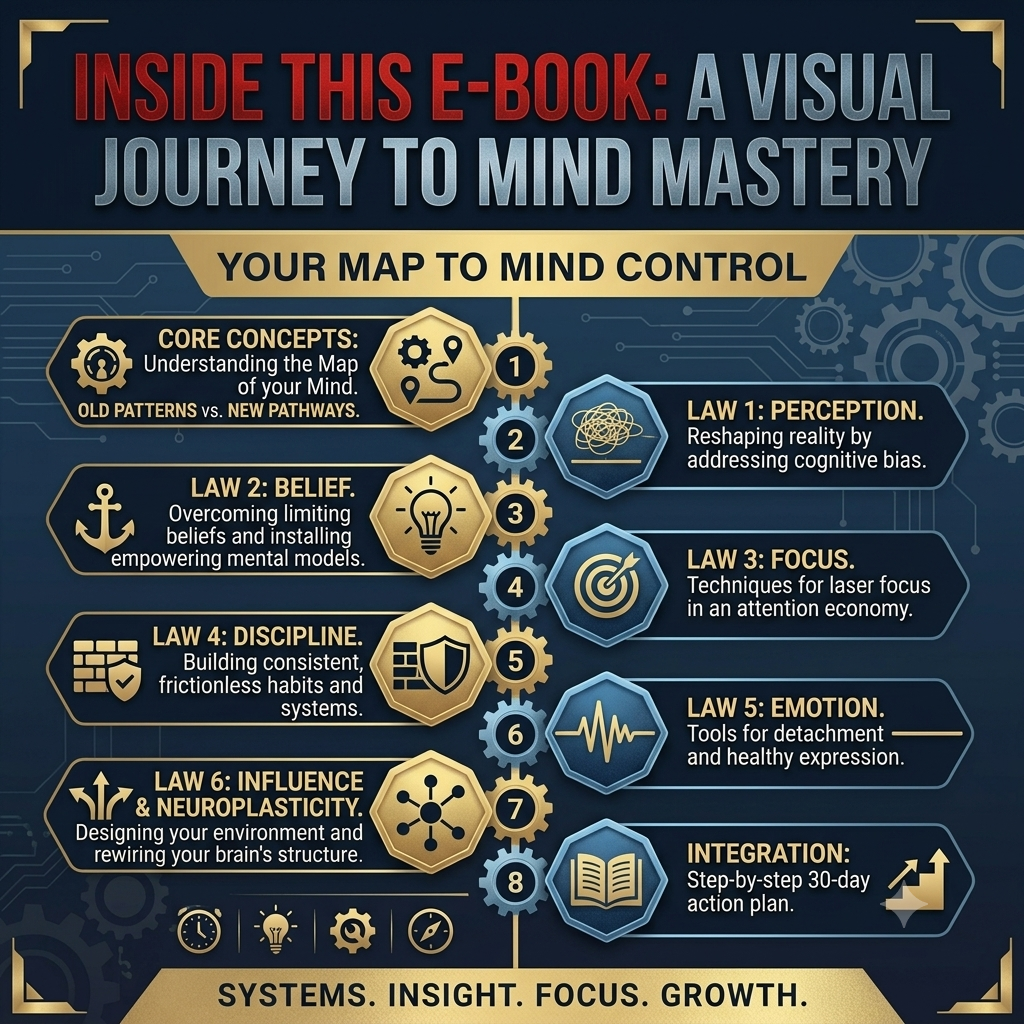
Explore the 7 Laws of Mental Mastery

1. The Law of Perception
Understand how your interpretation of situations can influence what you notice, how you respond and the meaning you assign to everyday experiences.
2. The Law of Belief
Explore how assumptions and long-held beliefs can affect confidence, decisions, opportunities you pursue and situations you avoid.
3. The Law of Focus
Learn why attention matters, how distractions compete for it and how to become more intentional about where you direct your focus.
4. The Law of Self-Discipline
Explore the role of routines, consistency and practical systems in following through on commitments without relying only on motivation.
5. The Law of Emotional Regulation
Understand how to notice emotional reactions, pause before responding and make more considered choices during difficult moments.
6. The Law of Influence
Examine how relationships, surroundings, digital content and everyday environments can shape attitudes, habits and behaviour.
7. The Law of Neuroplasticity
Discover the concept of the brain's capacity to change through experience and practice, and why repeated actions matter when developing new habits.
What Will You Learn?
- Recognise recurring thoughts and mental patterns that influence your everyday choices.
- Question assumptions and beliefs instead of automatically treating every thought as a fact.
- Create more intentional boundaries around attention and digital distractions.
- Understand how routines and systems can support consistency and self-discipline.
- Build a pause between an emotional reaction, an impulse and your next action.
- Become more aware of the people, environments and content influencing your behaviour.
- Understand how repetition and practice contribute to learning and habit development.
Is This Explainer Right for You?

- You know what you need to do but struggle to follow through consistently.
- You spend too much time replaying conversations or overthinking decisions.
- You find it difficult to protect your attention from notifications and distractions.
- You sometimes react emotionally and wish you had paused before responding.
- You want to understand the beliefs and habits influencing your decisions.
- You are interested in self-awareness, personal growth and practical self-discipline.
Everyday Challenges This Guide Explores
Overthinking
Recognising repetitive thought patterns and learning to approach decisions more deliberately.
Limiting Beliefs
Questioning assumptions that may influence what you attempt, expect or avoid.
Distraction
Understanding attention habits and creating a more focused environment for meaningful work.
Emotional Reactions
Recognising feelings and impulses while making room for a more considered response.
Inconsistent Discipline
Exploring how routines, preparation and repeatable systems can support follow-through.
External Influence
Becoming more conscious of how your surroundings, relationships and media habits affect your choices.
The Core Message
Your thoughts are not automatically facts. Your emotions do not have to dictate every action. And familiar habits do not have to remain unquestioned.
Greater self-awareness begins when you learn to notice your patterns and choose how to respond.
This is not about suppressing emotions, eliminating every negative thought or controlling everything that happens around you. It is about understanding your responses, questioning automatic patterns and becoming more deliberate in the choices available to you.
Ready to Understand Your Mind Better?
Explore the seven laws, examine the patterns influencing your everyday decisions and discover practical ideas for building greater focus, self-discipline and emotional awareness.
Get your copy of Your Biggest Enemy Is Your Uncontrolled Mind: Explained and begin exploring the principles of mental self-mastery.
Digital eBook | Easy-to-follow explanations | Read on your device
Frequently Asked Questions
1. What is Your Biggest Enemy Is Your Uncontrolled Mind: Explained about?
It is a self-help and personal-development explainer based on the work of Sourabh Dubey. It explores seven laws connected with perception, belief, focus, self-discipline, emotional regulation, influence and neuroplasticity.
2. What are the seven laws covered in this explainer?
The seven laws are the Law of Perception, Law of Belief, Law of Focus, Law of Self-Discipline, Law of Emotional Regulation, Law of Influence and Law of Neuroplasticity.
3. Is this guide suitable for beginners?
Yes. It is presented in accessible language and focuses on explaining personal-development concepts through practical ideas and relatable everyday situations.
4. Does this guide cover overthinking and procrastination?
Yes. It explores the mental patterns, beliefs, attention habits and behavioural responses that can contribute to overthinking, procrastination and inconsistent follow-through.
5. What does neuroplasticity mean?
Neuroplasticity refers to the brain's capacity to change and adapt through learning, experience and practice. The guide explores this concept in relation to repeated behaviours and habit development.
6. Is this book about suppressing emotions or controlling every thought?
No. The central idea is to develop greater awareness of thoughts, feelings and impulses, and to make more deliberate choices about how to respond. It does not suggest that every thought or emotion can or should be controlled.
7. Is this a physical book or a digital eBook?
This product is a digital eBook. No physical book will be shipped. The download link will be shared after the purchase is completed.
What's included in the box
What's included in the box